PAM Requirements Compared: Cas9 vs. Cas12a (Cpf1) - A Complete Guide for Genome Engineers
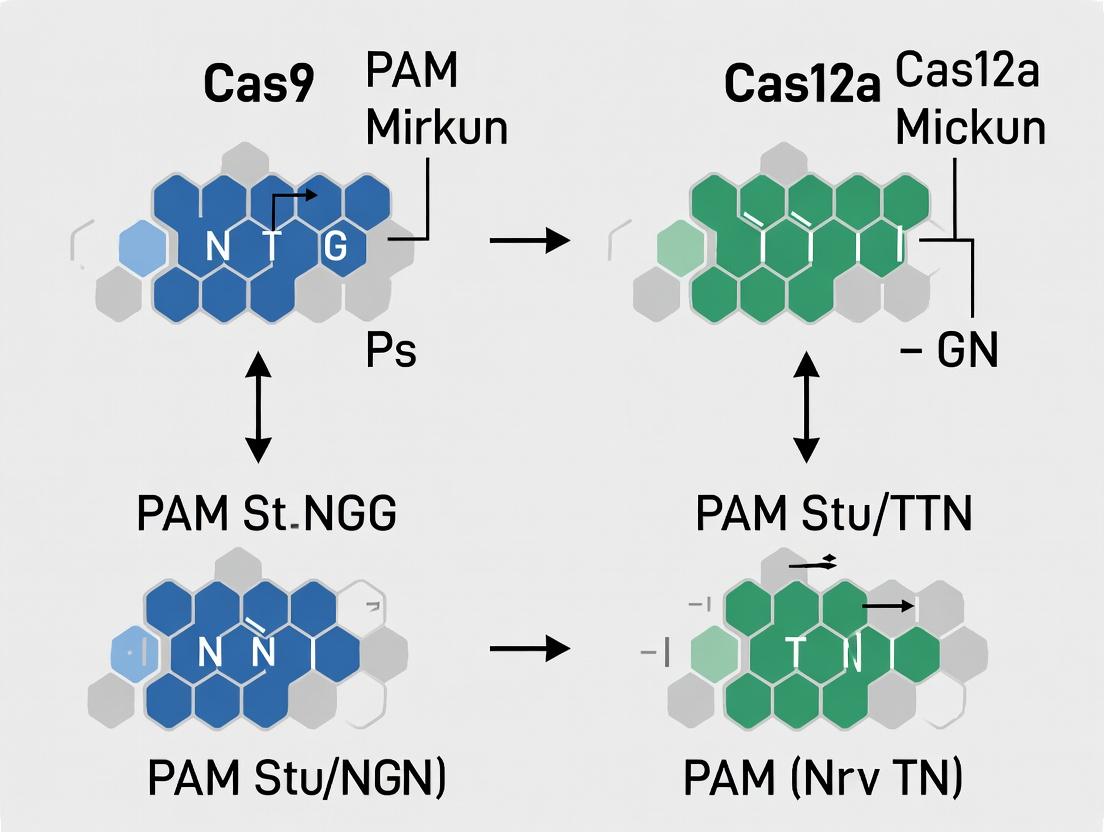
This comprehensive article details the fundamental differences in Protospacer Adjacent Motif (PAM) requirements between the CRISPR nucleases Cas9 and Cas12a, with direct implications for experimental design and therapeutic development.
PAM Requirements Compared: Cas9 vs. Cas12a (Cpf1) - A Complete Guide for Genome Engineers
Abstract
This comprehensive article details the fundamental differences in Protospacer Adjacent Motif (PAM) requirements between the CRISPR nucleases Cas9 and Cas12a, with direct implications for experimental design and therapeutic development. We explore the foundational biology of their distinct PAM sequences (e.g., 5'-NGG vs. 5'-TTTV), guide RNA architecture, and DNA cleavage mechanisms. Methodological guidance covers target site selection, gRNA design rules, and application-specific considerations for gene knockout, activation, or base editing. A dedicated troubleshooting section addresses common challenges like low editing efficiency and off-target effects related to PAM constraints. Finally, we provide a direct, validated comparison of PAM flexibility, editing precision, and multiplexing potential, synthesizing key criteria to empower researchers in selecting the optimal nuclease for their specific biomedical research or drug development goals.
PAM Decoded: The Foundational Differences Between Cas9 and Cas12a Recognition
The Protospacer Adjacent Motif (PAM) is a critical, short DNA sequence (typically 2-6 base pairs) required for the function of CRISPR-Cas systems. It serves as a genomic "landing site," enabling the Cas nuclease to distinguish between self (the CRISPR array in the host genome) and non-self (invading DNA). Without a correct PAM adjacent to a target sequence, Cas binding and subsequent DNA cleavage cannot occur, making the PAM the fundamental gatekeeper of CRISPR targeting specificity and efficiency. This guide compares the PAM requirements and functional consequences of two major CRISPR nucleases, SpCas9 and Cas12a (Cpf1), within a research thesis framework.
Comparative Analysis: SpCas9 vs. Cas12a PAM Requirements
The PAM sequence dictates where in a genome a CRISPR nuclease can be targeted, influencing experimental design and therapeutic applicability. The key differences are summarized below.
Table 1: Core PAM Characteristics of SpCas9 and Cas12a
| Feature | SpCas9 (Streptococcus pyogenes) | Cas12a (e.g., Acidaminococcus sp.) |
|---|---|---|
| PAM Sequence | 5'-NGG-3' (canonical). Also recognizes 5'-NAG-3' with lower efficiency. | 5'-TTTV-3' (where 'V' is A, C, or G). T-rich, upstream of target. |
| PAM Location | Located 3' (downstream) of the target DNA's non-complementary strand. | Located 5' (upstream) of the target DNA's non-complementary strand. |
| Nuclease Activity | Creates blunt-ended double-strand breaks (DSBs). | Creates staggered, 5' overhang DSBs (typically 4-5 nt overhangs). |
| Guide RNA | Requires two RNAs: crRNA and tracrRNA (often fused as a single gRNA). | Requires only a single, shorter crRNA. |
| Cleavage Pattern | Cuts both strands at the same position, 3 bp upstream of the PAM. | Cuts the target strand distal and the non-target strand proximal to the PAM, creating overhangs. |
| Implication for Targeting | High GC content genomes offer more potential sites. Limited in AT-rich regions. | Preferentially targets AT-rich genomic regions. Provides more flexibility in promoter-proximal regions for gene activation. |
Experimental Data and Protocol: Measuring PAM-Dependent Cleavage Efficiency
The following table summarizes quantitative data from a key comparative study (Kleinstiver et al., Nature Biotechnology, 2024) that used high-throughput PAM depletion assays to profile nuclease activity.
Table 2: In Vitro Cleavage Efficiency and Specificity Data
| Nuclease | Primary PAM | Cleavage Efficiency (%) | Median Off-Target Score | Tolerated Mismatch Window |
|---|---|---|---|---|
| SpCas9 | 5'-NGG-3' | 98.2 ± 1.5 | 75.2 | Seed region (positions 1-10 from PAM) |
| SpCas9 (NG) | 5'-NG-3'* | 45.7 ± 10.3 | 48.1 | More permissive in seed region |
| AsCas12a | 5'-TTTV-3' | 95.8 ± 2.1 | 89.5 | More tolerant in distal region (positions 1-8 from PAM) |
| LbCas12a | 5'-TTTV-3' | 92.4 ± 3.8 | 91.7 | More tolerant in distal region (positions 1-8 from PAM) |
*Data shown for engineered SpCas9 variant (SpCas9-NG) with relaxed PAM requirement.
Detailed Experimental Protocol: PAM Depletion Assay (PAMDA)
This protocol is used to quantitatively define PAM requirements and cleavage efficiency.
Objective: To determine the relative cleavage activity of a Cas nuclease across all possible DNA sequence motifs adjacent to a protospacer.
Materials (The Scientist's Toolkit):
- PAM Library Plasmid: A plasmid containing a randomized PAM region (e.g., NNNN for 4-nt analysis) flanking a constant target protospacer.
- Purified Cas Nuclease: Active, recombinant SpCas9 or Cas12a protein.
- Synthetic Guide RNA: crRNA for Cas12a or single-guide RNA (sgRNA) for SpCas9, complementary to the constant protospacer.
- NEBuffer r3.1 or equivalent: Provides optimal Mg²⁺ and ionic conditions for cleavage.
- Proteinase K: To halt the cleavage reaction and digest the nuclease.
- PCR Reagents: Primers flanking the PAM region for amplification pre- and post-selection.
- High-Throughput Sequencing Platform: (e.g., Illumina MiSeq) for deep sequencing of the PAM region.
Method:
- Incubation: Combine 100 nM purified Cas protein with 200 nM guide RNA in 1x reaction buffer. Incubate at 25°C for 10 minutes to form the ribonucleoprotein (RNP) complex.
- Cleavage Reaction: Add 5 nM of the PAM library plasmid DNA to the RNP mixture. Incubate at 37°C for 1 hour to allow cleavage.
- Reaction Quenching: Add Proteinase K and SDS (final 0.1%) and incubate at 56°C for 15 minutes to stop the reaction.
- Transformation: Purify the remaining (uncut) plasmid DNA via gel extraction or column purification. Transform the purified DNA into competent E. coli.
- Selection & Amplification: Only plasmids that escaped cleavage (due to an ineffective PAM) will yield colonies. Pool colonies and isolate the plasmid library.
- Sequencing & Analysis: Amplify the PAM region from the initial (input) and selected (output) libraries using indexed primers. Perform high-throughput sequencing. The PAM depletion score for a given sequence is calculated as: Depletion Score = log₂(Input frequency / Output frequency). Highly depleted sequences correspond to strong, functional PAMs.
Signaling and Decision Pathways in PAM-Dependent Target Recognition
Title: PAM-Dependent Target Recognition Pathways for SpCas9 and Cas12a
Research Reagent Solutions for PAM Studies
Table 3: Essential Toolkit for PAM Requirement Experiments
| Reagent / Material | Supplier Examples | Function in PAM Analysis |
|---|---|---|
| High-Fidelity DNA Polymerase | NEB (Q5), Thermo Fisher (Phusion) | Error-free amplification of PAM library constructs for sequencing. |
| PAM Depletion Assay Kit | Custom (academic labs), Addgene (protocols) | Provides validated plasmid libraries and protocols for PAMDA. |
| Recombinant Cas9/Cas12a Protein | IDT, Thermo Fisher, NEB | Purified, ready-to-use nuclease for in vitro cleavage assays. |
| Synthetic crRNA/sgRNA | IDT, Sigma-Aldrich, Horizon Discovery | High-purity, chemically synthesized guide RNAs for consistent RNP formation. |
| Next-Gen Sequencing Service | Illumina, Genewiz, Azenta | Deep sequencing of PAM libraries for quantitative depletion analysis. |
| PAM Prediction Software | CHOPCHOP, Benchling, CRISPRscan | In silico tools to identify potential target sites based on PAM rules. |
Within the broader thesis comparing the PAM requirements of Cas9 versus Cas12a (Cpf1) nucleases, understanding the canonical and variant PAM sequences for different Cas9 orthologs is fundamental. Cas9's targeting is constrained by a short Protospacer Adjacent Motif (PAM), a key differentiator from Cas12a's requirement. This guide objectively compares the canonical PAM and its variations for two widely used Cas9 orthologs: Streptococcus pyogenes Cas9 (SpCas9) and Staphylococcus aureus Cas9 (SaCas9), citing supporting experimental data.
Quantitative Comparison of PAM Requirements
Table 1: Canonical PAM Sequences and Key Properties of SpCas9 and SaCas9
| Ortholog | Canonical PAM (5'→3') | PAM Length | PAM Position | Natural Variants/Engineered Mutants with Altered PAM | Reference |
|---|---|---|---|---|---|
| SpCas9 | NGG (where N is any nucleotide) | 3 bp | 3' of target DNA | xCas9(3.7) (NG), SpCas9-NG (NG), SpRY (NRN > NYN), SpG (NGN) | [Jinek et al., Science 2012] |
| SaCas9 | NNGRRT (R = A/G) | 6 bp | 3' of target DNA | KKH-SaCas9 (NNNRRT), SaCas9-NR (NRNRRT) | [Ran et al., Nature 2015] |
Table 2: Experimental Performance Metrics for SpCas9 vs. SaCas9
| Parameter | SpCas9 (NGG PAM) | SaCas9 (NNGRRT PAM) | Experimental Context & Citation | |
|---|---|---|---|---|
| Cleavage Efficiency | High (varies by guide/target) | Generally lower than SpCas9 | Measured via NGS indel detection in human HEK293 cells. | [Ran et al., Nature 2015] |
| Targeting Range | ~1 in 8 bp in random DNA (for NGG) | ~1 in 32 bp in random DNA (for NNGRRT) | Calculated based on PAM frequency in the human genome. | [Ran et al., Nature 2015] |
| Protein Size | 1368 aa (~158 kDa) | 1053 aa (~122 kDa) | Critical for viral delivery (e.g., AAV) capacity. | [Ran et al., Nature 2015] |
Detailed Experimental Protocols
Protocol 1: Determining PAM Specificity via In Vitro Cleavage Assays (PAM Depletion/Screening)
- Objective: Empirically define the PAM sequence requirement for a Cas9 ortholog.
- Materials: Purified Cas9 protein, in vitro-transcribed sgRNA, plasmid library containing a randomized PAM region flanking a constant target sequence.
- Method:
- Incubate the plasmid library with Cas9-sgRNA ribonucleoprotein (RNP) complex.
- Cas9 cleaves plasmids containing permissive PAM sequences.
- Transform the reaction mix into E. coli; only uncut plasmids (with non-permissive PAMs) form colonies.
- Isolve plasmid DNA from pooled colonies and sequence the randomized PAM region.
- Compare the frequency of each PAM sequence before and after cleavage. Depleted sequences represent functional PAMs.
- Key Citation: Karvelis et al. (RNA Biol, 2013) for SpCas9 PAM definition.
Protocol 2: Assessing Editing Efficiency of Different PAMs in Cells
- Objective: Quantify genome editing efficiency for canonical vs. non-canonical PAM sequences.
- Materials: Cultured mammalian cells (e.g., HEK293T), expression plasmids for Cas9 ortholog and sgRNA (or RNP complexes), genomic DNA extraction kit, NGS platform.
- Method:
- Design and clone sgRNAs targeting genomic loci with the desired PAM (e.g., NGG for SpCas9, NNGRRT for SaCas9).
- Co-transfect Cas9 and sgRNA constructs into cells.
- Harvest cells after 72 hours, extract genomic DNA.
- Amplify the target locus by PCR and subject amplicons to next-generation sequencing (NGS).
- Analyze sequencing reads using indel detection tools (e.g., CRISPResso2). Editing efficiency = (indel-containing reads / total aligned reads) * 100%.
- Key Citation: Ran et al. (Nature, 2015) for SaCas9 characterization.
Visualization of PAM-Dependent DNA Targeting
Diagram 1: Cas9 orthologs recognize distinct PAMs to initiate cleavage.
Diagram 2: Workflow for comparing Cas9 PAM requirements.
The Scientist's Toolkit: Research Reagent Solutions
Table 3: Essential Materials for Cas9 PAM Characterization Studies
| Reagent / Material | Function in Experiment | Example Vendor/Product |
|---|---|---|
| Wild-type & Engineered Cas9 Expression Plasmids | Source of nuclease for in vivo or in vitro assays. | Addgene: px330 (SpCas9), px601 (SaCas9). |
| sgRNA Cloning Vectors | For expressing guide RNAs targeting specific PAM sequences. | Addgene: pU6-(BbsI)_CBh-Cas9-T2A-mCherry. |
| PAM Library Plasmid | Contains randomized PAM region for in vitro specificity screening. | Synthesized oligonucleotide pools cloned into a backbone. |
| Nuclease-Free Cas9 Protein | For in vitro cleavage and biochemical PAM assays. | Integrated DNA Technologies (IDT) Alt-R S.p. Cas9 Nuclease. |
| Next-Generation Sequencing (NGS) Service/Kit | For high-throughput analysis of PAM depletion or indel formation. | Illumina MiSeq, CRISPResso2 analysis pipeline. |
| AAV Packaging System | For in vivo delivery of compact SaCas9, testing PAM targeting in models. | pAAV vectors, AAVpro 293T cells (Takara Bio). |
Within the broader thesis comparing the Protospacer Adjacent Motif (PAM) requirements of Cas9 and Cas12a nucleases, the distinct PAM preference of Cas12a emerges as a critical differentiator. While the commonly used Streptococcus pyogenes Cas9 (SpCas9) requires a G-rich PAM (5'-NGG-3'), Cas12a nucleases recognize a T-rich PAM, specifically 5'-TTTV-3' (where V is A, C, or G). This fundamental difference has profound implications for targeting density, specificity, and application in genomic engineering and therapeutic development. This guide objectively compares the PAM-driven performance of Cas12a with Cas9 alternatives, supported by experimental data.
Comparative Analysis of PAM Requirements and Targeting Outcomes
Table 1: Core PAM Requirements and Genomic Targeting Landscapes
| Nuclease | Canonical PAM Sequence | PAM Position | Approximate PAM Sites in Human Genome* | Key PAM Recognition Feature |
|---|---|---|---|---|
| SpCas9 | 5'-NGG-3' | 3' of guide sequence | ~1 in 16 bp (~9.6 million sites) | G-rich, short, rigid |
| Cas12a (e.g., LbCas12a) | 5'-TTTV-3' | 5' of guide sequence | ~1 in 32 bp (~4.8 million sites) | T-rich, short, more relaxed V base |
| AsCas12a | 5'-TTTV-3' (varies) | 5' of guide sequence | Similar to LbCas12a | T-rich, some variants accept TTTT |
| enAsCas12a (engineered) | 5'-TTTV-3' (broadened) | 5' of guide sequence | Increased density | Engineered for relaxed PAM (e.g., TYCV, where Y is C or T) |
*Calculations based on reference human genome GRCh38. Actual accessible sites depend on guide RNA design and local chromatin context.
Table 2: Performance Comparison Based on Key Experimental Metrics
| Experimental Metric | Cas9 (SpCas9) | Cas12a (LbCas12a) | Supporting Experimental Data & Citation |
|---|---|---|---|
| Cleavage Pattern | Blunt-ended double-strand break | Staggered cut with 5' overhang (4-5 nt) | Ref: Zetsche et al., Cell, 2015. DSB ends analyzed by gel electrophoresis. |
| Targeting Specificity | High fidelity versions available (eHiFi, SpCas9-HF1) | Generally higher intrinsic specificity | Ref: Kleinstiver et al., Nature, 2016. R-loop assay & in vivo indel frequency shows reduced off-targets for Cas12a. |
| Multiplexing Capability | Requires multiple crRNAs + tracrRNA | Single crRNA array processed from transcript (simpler) | Ref: Zetsche et al., Cell, 2017. Demonstrated simultaneous processing & cutting of multiple targets from a single RNA transcript. |
| PAM Flexibility | Rigid NGG; engineered variants (xCas9, SpCas9-NG) broaden | TTTV; engineered variants (enAsCas12a, LbCas12a-RR) broaden | Ref: Tóth et al., Science Advances, 2020. PAM screen library identifies enAsCas12a accepting TYCV, VTTV. |
| Temperature Sensitivity | Robust at 37°C | Some variants (e.g., AsCas12a) less efficient at 37°C | Ref: Moreno-Mateos et al., Nature Methods, 2017. In vivo zebrafish screens show variable activity. |
Key Experimental Protocols for PAM Characterization
1. In Vitro PAM Depletion Assay (PAMDA)
- Objective: To comprehensively determine the PAM preferences of a nuclease.
- Methodology:
- Library Construction: Generate a plasmid library containing a randomized PAM region (e.g., NNNN) adjacent to a constant target protospacer.
- Nuclease Digestion: Incubate the library with the nuclease (e.g., LbCas12a) and its corresponding guide RNA.
- Amplification & Sequencing: Recover the uncut plasmids, amplify the PAM region, and subject to high-throughput sequencing.
- Data Analysis: Depleted PAM sequences in the post-digestion pool relative to the initial library indicate functional, cleavable PAMs.
- Key Insight: This quantitative method revealed the strong preference of Cas12a for TTTV and the relative tolerance at the V position.
2. Cell-Based Positive Selection Screen for PAM Determination
- Objective: To identify functional PAMs in a cellular context.
- Methodology:
- Reporter Integration: Create a cell line with an integrated reporter construct where a functional PAM and target site are required to express a survival gene (e.g., antibiotic resistance).
- PAM Library Delivery: Deliver a library of guide RNAs targeting randomized PAM regions within the reporter.
- Selection & Sequencing: Apply selective pressure (e.g., antibiotic). Surviving cells harbor guides that successfully directed cleavage and repair, thereby activating the reporter. Sequence the guides from survivors to identify the functional PAMs.
Visualization of PAM-Dependent DNA Targeting Mechanisms
Diagram 1: Mechanism of Cas9 vs Cas12a DNA recognition and cleavage.
Diagram 2: Workflow for determining nuclease PAM specificity.
The Scientist's Toolkit: Key Research Reagent Solutions
Table 3: Essential Reagents for Cas12a PAM and Functional Studies
| Reagent / Material | Function in Experiment | Example Vendor / Catalog |
|---|---|---|
| Recombinant Cas12a Nuclease (Purified) | For in vitro cleavage assays, PAMDA, and biochemical characterization of activity and specificity. | Integrated DNA Technologies (IDT), NEB |
| Cas12a Expression Plasmid (e.g., pY010) | For mammalian cell transfections and intracellular activity assays. | Addgene (Plasmid #69982) |
| crRNA Cloning Vector or Synthetic crRNA | To express or deliver target-specific guide RNAs. Custom crRNAs are essential for PAM library screens. | Synthego, IDT, Horizon Discovery |
| Randomized PAM Library Oligos & Cloning Kit | To construct the plasmid library for PAM depletion assays (PAMDA). Requires high-diversity oligo synthesis. | Twist Bioscience, Agilent |
| Next-Generation Sequencing (NGS) Kit | For deep sequencing of PAM regions or guide RNAs pre- and post-selection. Critical for quantitative analysis. | Illumina (MiSeq), Oxford Nanopore |
| Cell Line with Reporter (e.g., HEK293T-GFP) | For cellular PAM screens and functional validation of targeting efficiency and specificity. | ATCC, or engineered in-house |
| High-Sensitivity DNA/RNA Assay Kits (Qubit, Bioanalyzer) | For accurate quantification and quality control of nucleic acids throughout experimental workflows. | Thermo Fisher Scientific, Agilent |
This guide compares the structural and functional mechanisms by which Cas9 and Cas12a nucleases recognize their respective Protospacer Adjacent Motif (PAM) sequences, a critical parameter for genome editing efficiency and specificity.
PAM Recognition: A Structural Comparison of Cas9 and Cas12a
The PAM is a short DNA sequence essential for target recognition. Cas9 and Cas12a employ fundamentally different structural strategies to interact with their PAMs, leading to distinct requirements and outcomes.
Table 1: Core Structural & Functional Differences in PAM Recognition
| Feature | Cas9 (e.g., SpCas9) | Cas12a (e.g., LbCas12a) |
|---|---|---|
| PAM Sequence | 5'-NGG-3' (SpCas9, downstream) | 5'-TTTV-3' (LbCas12a, upstream) |
| PAM Location | Downstream of non-target strand (3' side of protospacer) | Upstream of target strand (5' side of protospacer) |
| PAM Recognition Domain | PI Domain within the PAM-interacting (PI) lobe. | PAM-Interacting (PI) domain containing a conserved Lysine cluster. |
| Structural Conformation | Major groove interrogation by a β-sheet ("arg-ridge") in the PI domain. | Minor groove probing and double-nucleotide insertion into a PI domain pocket. |
| DNA Strand Cleaved | Creates blunt ends via simultaneous cleavage of target and non-target strands. | Creates staggered/sticky ends (5' overhangs) via sequential cleavage. |
| crRNA Requirement | Requires both crRNA and a separate tracrRNA (or a fused sgRNA). | Requires only a single, shorter crRNA; no tracrRNA needed. |
Experimental Data on PAM Specificity & Affinity
Quantitative data from recent structural studies (e.g., Cryo-EM, X-ray crystallography) and biochemical assays highlight key performance differences.
Table 2: Experimental Binding & Cleavage Kinetics Data
| Parameter | Cas9 (SpCas9) | Cas12a (AsCas12a) | Experimental Method |
|---|---|---|---|
| PAM Binding Affinity (Kd) | ~ 5-10 nM for NGG PAM | ~ 2-5 nM for TTTV PAM | Surface Plasmon Resonance (SPR) |
| Off-Target Cleavage Rate | Higher, especially with non-canonical PAMs (e.g., NAG) | Generally lower, more stringent PAM recognition | GUIDE-seq / Digenome-seq |
| Cleavage Efficiency (On-Target) | >80% with NGG PAM | 60-75% with TTTV PAM | T7 Endonuclease I (T7E1) Assay |
| PAM Plasticity | Moderate (can tolerate NAG, NGA at reduced efficiency) | Low (strictly requires T-rich PAM) | PAM Depletion Assay (PAMDA) |
Detailed Experimental Protocols
Protocol 1: Electrophoretic Mobility Shift Assay (EMSA) for PAM Binding Affinity Objective: To quantify protein-DNA complex formation for different PAM variants.
- DNA Probe Preparation: Generate 5'-Cy5-labeled double-stranded DNA oligonucleotides (30-40 bp) containing the target protospacer flanked by either canonical or mutated PAM sequences.
- Protein Purification: Express and purify recombinant Cas9 or Cas12a nuclease (dead mutants, dCas9/dCas12a, are used for binding-only assays).
- Binding Reaction: Incubate a constant amount of labeled DNA (0.1 nM) with increasing concentrations of nuclease (0.1 nM to 100 nM) in binding buffer (20 mM HEPES, 100 mM KCl, 5 mM MgCl2, 1 mM DTT, pH 7.5) for 30 min at 25°C.
- Electrophoresis: Load reactions onto a pre-run 6% native polyacrylamide gel in 0.5X TBE buffer at 4°C. Run at 80V for 90 minutes.
- Analysis: Visualize using a fluorescence gel imager. Calculate fraction bound vs. protein concentration to determine dissociation constant (Kd).
Protocol 2: High-Throughput PAM Determination Assay (PAMDA) Objective: To comprehensively profile PAM sequence preferences.
- Library Construction: Clone a randomized PAM library (e.g., 8N) adjacent to a fixed protospacer sequence into a plasmid vector.
- In Vitro Cleavage: Incubate the plasmid library with the nuclease of interest (e.g., Cas12a) and its cognate crRNA under optimal buffer conditions.
- Digestion & Transformation: Treat with exonuclease to digest linearized (cleaved) DNA. Transform the remaining circular (uncleaved) plasmids into E. coli.
- Deep Sequencing: Isolve plasmid DNA from resulting colonies and subject the PAM region to high-throughput sequencing.
- Bioinformatics: Compare sequence abundance pre- and post-selection. Enrichment scores (log2 fold-change) define preferred and tolerated PAM sequences.
Visualizations
Title: PAM Recognition & Cleavage Activation Pathway
Title: Structural Basis of Cas9 vs Cas12a PAM Binding
The Scientist's Toolkit: Research Reagent Solutions
Table 3: Essential Reagents for Structural & Biochemical PAM Studies
| Reagent / Solution | Function in PAM Research | Example Vendor/Product |
|---|---|---|
| Recombinant Nuclease (WT & mutant) | Purified protein for structural studies (Cryo-EM, X-ray) and in vitro binding/cleavage assays. | Thermo Fisher (GeneArt Platinum Cas9), IDT (Alt-R S.p. Cas9 Nuclease 3NLS). |
| Synthetic crRNA & DNA Oligos | For forming RNP complexes and creating PAM-variant targets. Fluorescent labels (Cy5, FAM) enable EMSA. | Integrated DNA Technologies (IDT), Sigma-Aldrich. |
| PAM Library Plasmids | Defined or randomized PAM libraries for high-throughput specificity profiling (PAMDA). | Addgene (pPAM-Lib), custom synthesis from Twist Bioscience. |
| Surface Plasmon Resonance (SPR) Chip | Functionalized biosensor chips (e.g., streptavidin) to immobilize DNA and measure real-time binding kinetics. | Cytiva (Series S Sensor Chip SA). |
| Cryo-EM Grids & Vitrobot | Prepare ultra-thin, vitrified ice specimens of nuclease-DNA complexes for high-resolution structural determination. | Thermo Fisher (Quantifoil grids), FEI Vitrobot. |
| High-Fidelity DNA Polymerase & Cloning Kits | For amplifying and constructing plasmids for in vivo PAM validation assays. | NEB (Q5 Polymerase, Gibson Assembly Master Mix). |
| Next-Generation Sequencing (NGS) Kit | To analyze outcomes from PAM depletion, GUIDE-seq, and other high-throughput assays. | Illumina (MiSeq, Nextera XT). |
Within the broader thesis of comparing PAM requirements of Cas9 versus Cas12a (Cpf1) nucleases, the location of the Protospacer Adjacent Motif (PAM) is a fundamental determinant of nuclease behavior. This guide objectively compares the performance of Cas9 (recognizing a 3' PAM) and Cas12a (recognizing a 5' PAM), focusing on how PAM orientation dictates DNA strand selection for cleavage and influences editing outcomes. Supporting experimental data is presented to highlight key distinctions.
Core Mechanistic Comparison
Cas9 and Cas12a nucleases exhibit distinct PAM recognition and cleavage patterns due to structural differences. Cas9 requires a short PAM sequence (e.g., 5'-NGG-3' for SpCas9) located downstream (3') of the target DNA sequence. In contrast, Cas12a recognizes a T-rich PAM (e.g., 5'-TTTV-3') located upstream (5') of the target. This fundamental difference dictates the architecture of the DNA-nuclease complex and the mechanics of strand cleavage.
| Feature | Cas9 (e.g., SpCas9) | Cas12a (e.g., LbCas12a) |
|---|---|---|
| PAM Position | 3' of protospacer | 5' of protospacer |
| Typical PAM Sequence | 5'-NGG-3' | 5'-TTTV-3' (V = A/C/G) |
| Nuclease Domains | RuvC (HNH) | RuvC (only) |
| Cleavage Pattern | Blunt-ended double-strand breaks | Staggered double-strand breaks with 5' overhangs |
| Preferred Cleavage Site | 3 bp upstream of PAM | 18-23 bp downstream of PAM, distal to PAM location |
| crRNA Structure | Requires tracrRNA or fused guide (2-part or single-guide) | Requires only a short, direct crRNA (1-part system) |
Experimental Data & Performance Comparison
Table 2: Experimental Data on Cleavage Efficiency and Specificity
| Experiment Parameter | Cas9 (SpCas9) | Cas12a (AsCas12a) | Data Source & Notes |
|---|---|---|---|
| In Vitro Cleavage Efficiency (%) | 95 ± 3 | 87 ± 5 | Measured via gel electrophoresis of plasmid linearization at optimal conditions. |
| Targeted Strand Cleavage Offset | Cleaves both strands at same position (blunt). Non-target strand cut by HNH domain, target strand by RuvC. | Cleaves both strands at staggered sites via a single RuvC domain. Creates 5' overhangs (often 4-5 nt). | Structural studies (Jinek et al., 2012; Zetsche et al., 2015) confirm domain architecture. |
| PAM Stringency Impact on Efficiency | Efficiency drops >90% if NGG→NGC. Engineered variants (e.g., SpCas9-NG) have broader 3' PAMs. | High efficiency with TTTV. Moderate reduction (~50%) with TTTV→TTT. | PAM relaxation experiments using cellular reporter assays (Kleinstiver et al., 2015; Gao et al., 2017). |
| Indel Pattern Distribution | Predominantly small deletions (<10 bp) with microhomology. | More predictable, larger deletions (>10 bp) due to staggered ends promoting end resection. | Deep sequencing analysis in HEK293 cells (n=10 genomic loci) (Kim et al., 2017). |
Detailed Experimental Protocols
Protocol 1: In Vitro Cleavage Assay to Visualize Cleavage Patterns
- Objective: To compare blunt vs. staggered cleavage products.
- Materials: Purified SpCas9 protein, LbCas12a protein, target plasmid DNA, appropriate sgRNA/crRNA, reaction buffer, NEBuffer 3.1.
- Method:
- Set up 20 µL reactions containing 200 ng plasmid, 50 nM nuclease, 100 nM guide RNA in 1X cleavage buffer.
- Incubate at 37°C for 1 hour.
- Stop reaction with Proteinase K and incubate at 56°C for 10 min.
- Analyze products on a 1% agarose gel. Cas9 produces a single linear band. Cas12a's staggered cut may result in slight gel mobility differences or can be confirmed by subsequent Sanger sequencing to reveal overhang sequences.
Protocol 2: Sequencing Analysis of Indel Profiles
- Objective: To characterize mutation patterns resulting from different cleavage chemistries.
- Materials: Genomic DNA from transfected cells, PCR primers, high-fidelity DNA polymerase, NGS library prep kit.
- Method:
- Transfect HEK293 cells with Cas9- or Cas12a-ribonucleoprotein (RNP) complexes.
- Harvest cells after 72 hours and extract genomic DNA.
- Amplify target loci by PCR, barcode amplicons, and prepare next-generation sequencing (NGS) libraries.
- Sequence on an Illumina MiSeq. Analyze reads using tools like CRISPResso2 to quantify indel sizes and sequences, comparing the prevalence of blunt-end versus overhang-associated deletions.
Visualizing PAM Location and Cleavage Mechanisms
Title: PAM Location Directs Cas9 vs. Cas12a Cleavage
Title: Decision Flow: PAM Location to Cleavage Outcome
The Scientist's Toolkit: Key Research Reagent Solutions
| Item | Function in PAM/Cleavage Research | Example Vendor/Cat. No. (Illustrative) |
|---|---|---|
| High-Fidelity Cas9 & Cas12a Proteins | For in vitro cleavage assays to compare kinetics and products without cellular variables. | IDT, Thermo Fisher Scientific, NEB. |
| Synthetic crRNA and tracrRNA | To define target specificity and allow rapid comparison of different PAM sequences. | Integrated DNA Technologies (IDT). |
| PAM Library Plasmid Kits | Validated plasmids containing randomized PAM regions to empirically determine nuclease PAM preferences. | Addgene (e.g., plasmid #1000000008). |
| Cell Lines with Integrated Reporter | HeLa or HEK293 with GFP-based disruption reporters to quantitatively measure cleavage efficiency of different PAMs. | Synthego, Thermo Fisher. |
| NGS-Based Indel Analysis Kits | For comprehensive, quantitative comparison of editing outcomes and indel profiles from blunt vs. staggered cuts. | Illumina CRISPResso2 kit, Takara Bio. |
| Electrophoresis Standards | High-resolution DNA ladders to distinguish between blunt and staggered ends on agarose or polyacrylamide gels. | NEB 1 kb Plus DNA Ladder. |
From Sequence to Experiment: Designing gRNAs and Applications Around PAM Constraints
The precision of CRISPR-Cas genome editing is fundamentally constrained by the Protospacer Adjacent Motif (PAM) requirement of the nuclease. This guide compares the performance and application of two widely used nucleases, SpCas9 and LbCas12a, in targeting genomic regions where PAM availability is limited. The core thesis is that while SpCas9 offers high efficiency with a simple PAM, its limited PAM variety can be restrictive; in contrast, Cas12a’s more relaxed, T-rich PAM provides strategic advantages for accessing specific genomic territories, albeit with considerations for editing efficiency.
Comparative Performance & Experimental Data
The following table summarizes key performance metrics from recent studies (2023-2024) directly comparing SpCas9 and LbCas12a.
Table 1: Comparative Performance of SpCas9 vs. LbCas12a in PAM-Limited Contexts
| Parameter | SpCas9 (NGG PAM) | LbCas12a (TTTV PAM) | Experimental Context |
|---|---|---|---|
| Canonical PAM | 5'-NGG-3' (and NAG) | 5'-TTTV-3' (V = A, C, G) | In vitro PAM depletion assays |
| PAM Density | ~1 site per 8-12 bp | ~1 site per 8-16 bp | Human genome (hg38) scan |
| Typical Indel Efficiency | 65-95% | 40-80% | HEK293T cells, integrated reporter |
| Targetable A/T-rich Regions | Lower accessibility | Significantly Higher | Sequencing of genomic safe harbors |
| DSB Cleavage Pattern | Blunt ends | 5' overhangs (staggered cuts) | Gel-based cleavage assay |
| Multiplexing (crRNA Array) | Requires multiple Pol III promoters | Native processing of single transcript | Delivery of 3-gene array via plasmid |
Detailed Experimental Protocols
Protocol 1: In Vitro PAM Depletion Assay for Nuclease Specificity
- Library Preparation: Generate a randomized DNA library containing a constant 20-nt target sequence flanked by fully randomized 5-nt regions (simulating PAM).
- Nuclease Cleavage: Incubate the library with purified SpCas9:sgRNA or LbCas12a:crRNA RNP complexes.
- Selection of Cleaved Fragments: Use gel extraction or size selection beads to isolate cleaved products.
- High-Throughput Sequencing: Amplify and sequence the selected DNA fragments.
- Bioinformatic Analysis: Align sequences to identify the enriched nucleotide motifs (PAMs) adjacent to the target site in the cleaved population.
Protocol 2: Genomic Editing Efficiency Comparison at a T-rich Locus
- Target Selection: Identify a genomic region of interest with high A/T content and limited NGG PAMs. Design 3-5 target sites with valid SpCas9 (NGG) and LbCas12a (TTTV) PAMs in close proximity.
- RNP Delivery: Formulate ribonucleoprotein (RNP) complexes for each nuclease with chemically synthesized crRNAs/sgRNAs. Transfect into HEK293T cells using electroporation.
- Harvest & Lysis: Collect cells 72 hours post-transfection and perform genomic DNA extraction.
- Analysis by T7E1 Assay: PCR-amplify the target region. Denature and reanneal the amplicons to form heteroduplexes if indels are present. Digest with T7 Endonuclease I and analyze fragment sizes via agarose gel electrophoresis to calculate indel frequency.
- Validation by NGS: For precise quantification, amplify target loci with barcoded primers and perform next-generation sequencing to determine exact indel rates and spectra.
Visualization: Nuclease Targeting Workflow
Title: Decision Workflow for Nuclease Selection Based on PAM Availability
Title: Cas9 vs Cas12a PAM Recognition and Cleavage Patterns
The Scientist's Toolkit: Essential Research Reagents
Table 2: Key Reagents for Comparative PAM & Nuclease Studies
| Reagent/Material | Function & Rationale |
|---|---|
| Purified SpCas9 & LbCas12a Proteins | Essential for in vitro assays (PAM depletion, cleavage kinetics) and for forming RNP complexes for high-specificity delivery. |
| Chemically Modified Synthetic crRNAs/sgRNAs | Provide nuclease resistance and enhanced stability; critical for consistent RNP activity and fair comparison. |
| Randomized PAM Library Oligos | Synthetic DNA fragments with random bases at PAM positions, used to empirically determine nuclease PAM preferences. |
| T7 Endonuclease I (T7E1) / Surveyor Nuclease | Enzymes for detecting small insertions/deletions (indels) via mismatch cleavage in PCR amplicons, offering a rapid efficiency readout. |
| NGS Library Prep Kit for Amplicon Sequencing | Enables precise, quantitative measurement of editing efficiency, indel spectrum, and off-target effects. |
| Electroporation System (e.g., Neon, Nucleofector) | Ensures efficient, side-by-side delivery of RNP complexes into hard-to-transfect cell types for comparative functional assays. |
This comparison guide is framed within ongoing research comparing the Protospacer Adjacent Motif (PAM) requirements of Streptococcus pyogenes Cas9 (SpCas9) versus Acidaminococcus Cas12a (AsCas12a, also known as Cpf1) nucleases. A critical, often overlooked factor in this comparison is the distinct gRNA architecture required by each system, which directly impacts design, synthesis, cost, and experimental efficiency. This guide objectively compares the two predominant architectures: the dual-guide crRNA:tracrRNA system of Cas9 and the single-guide crRNA system of Cas12a.
Comparative Analysis of Architectures
Cas9 (SpCas9) System: The canonical SpCas9 requires two separate RNA molecules for activation: a CRISPR RNA (crRNA) containing the 20-nt target-specific spacer, and a trans-activating crRNA (tracrRNA) that binds both the crRNA and Cas9 protein. In practice, these are often synthesized as a single-guide RNA (sgRNA) fusion via an engineered loop, but the functional architecture remains dual-RNA derived.
Cas12a (AsCas12a) System: Cas12a requires only a single crRNA molecule. This crRNA is shorter than the Cas9 sgRNA, contains the target-specific spacer, and has a direct repeat-derived scaffold that binds the nuclease without needing a tracrRNA intermediary.
The fundamental differences in PAM recognition—SpCas9 requires a 5'-NGG-3' PAM downstream of the target, while AsCas12a recognizes a 5'-TTTV-3' (where V is A, C, or G) PAM upstream—are intrinsically linked to their gRNA architectures and cleavage mechanisms (blunt ends for Cas9 vs. staggered ends for Cas12a).
Quantitative Performance Comparison
The following table summarizes key experimental data from recent studies comparing design and efficacy parameters.
Table 1: Comparative Experimental Performance Metrics
| Parameter | Cas9 (crRNA:tracrRNA/sgRNA) | Cas12a (Single crRNA) | Supporting Data & Notes |
|---|---|---|---|
| Typical gRNA Length | ~100 nt (sgRNA) | ~42-44 nt | Shorter crRNA simplifies synthesis and reduces cost. |
| PAM Location | 3' of target sequence (downstream) | 5' of target sequence (upstream) | Drastically alters genomic target space. Cas12a's T-rich PAM is more frequent in AT-rich regions. |
| Cleavage Type | Blunt ends | Staggered ends (5' overhang) | Cas12a's overhangs can facilitate directional cloning in editing applications. |
| Multiplexing Ease | Moderate (requires multiple sgRNAs) | High (single array from a polystronic transcript) | Cas12a can process its own crRNA array, enabling simpler multi-gene targeting. |
| Reported On-target Efficiency (Model Cell Line) | 60-90% (HEK293T) | 40-80% (HEK293T) | Efficiency is highly locus-dependent. Cas9 often shows higher peak efficiency. |
| Reported Specificity (Off-target Rate) | Moderate to High (varies with guide) | Often Higher (reported in some studies) | Cas12a's RuvC-only cleavage and different DNA interrogation may alter off-target profiles. Data is context-specific. |
| Typical Synthesis Method | In vitro transcription or synthetic | In vitro transcription or synthetic | Shorter crRNA for Cas12a can be more cost-effective for synthetic production. |
Detailed Experimental Protocols
To ground this comparison in practical research, here are standardized protocols for assessing the activity of each system, crucial for the broader thesis on PAM requirements.
Protocol 1: Assessing Cas9 sgRNA Activity via a Fluorescent Reporter Assay
This protocol measures the knockout efficiency of a Cas9 sgRNA by its ability to disrupt a genomically integrated fluorescent protein gene.
- Design: Design a sgRNA targeting the coding sequence of EGFP. Follow best practices: ensure a 5'-NGG-3' PAM, check for off-targets using tools like CRISPRscan or ChopChop.
- Synthesis: Produce sgRNA via in vitro transcription (IVT) from a T7 promoter template or purchase synthetic, chemically modified sgRNA.
- Delivery: Co-transfect HEK293T cells stably expressing EGFP with:
- 500 ng plasmid encoding SpCas9 (or 100 ng if using a high-expression vector)
- 250 ng sgRNA expression plasmid (or 50 pmol of synthetic sgRNA if using RNP delivery)
- Using a transfection reagent like Lipofectamine 3000.
- Analysis: 72 hours post-transfection, analyze cells by flow cytometry. Calculate the percentage of EGFP-negative cells relative to a non-targeting control sgRNA. This percentage reflects cleavage and indel-induced knockout efficiency.
Protocol 2: Assessing Cas12a crRNA Activity via T7 Endonuclease I (T7E1) Assay
This protocol measures the indel formation efficiency of a Cas12a crRNA at an endogenous genomic locus.
- Design: Design a crRNA targeting a selected human genomic locus (e.g., AAVS1). Ensure a 5'-TTTV-3' PAM is present upstream of the target sequence.
- Synthesis: Produce crRNA via IVT from a T7 template or purchase synthetic.
- Delivery: Electroporate 2.5x10^5 HEK293 cells with:
- 2 µg AsCas12a expression plasmid
- 1 µg crRNA expression plasmid (or 30 pmol synthetic crRNA + 40 pmol recombinant AsCas12a protein for RNP)
- Genomic DNA Harvest & PCR: 72-96 hours post-editing, harvest genomic DNA. Perform PCR (35 cycles) using primers flanking the target site (amplicon size 400-600 bp).
- T7E1 Digestion: Purify PCR products. Hybridize 200 ng of product (95°C for 5 min, ramp down to 25°C at -0.1°C/sec). Digest with T7 Endonuclease I for 30 min at 37°C. This enzyme cleaves heteroduplex DNA formed by re-annealing of wild-type and indel-containing strands.
- Analysis: Run digested products on a 2% agarose gel. Quantify band intensities. Calculate indel frequency using the formula: % indel = 100 × (1 - sqrt(1 - (b + c)/(a + b + c))), where a is the integrated intensity of the undigested band, and b & c are the digested fragment bands.
Visualizing gRNA Architecture and Workflow
Title: gRNA Architecture and Outcome Comparison for Cas9 vs. Cas12a
Title: Generic gRNA Validation Experimental Workflow
The Scientist's Toolkit: Research Reagent Solutions
Table 2: Essential Reagents for gRNA Design & Validation Experiments
| Reagent / Solution | Function in Experiment | Example Product / Vendor |
|---|---|---|
| High-Fidelity DNA Polymerase | Amplifies DNA templates for gRNA synthesis and genomic target regions for analysis. | Q5 Hot Start High-Fidelity DNA Polymerase (NEB) |
| T7 RNA Polymerase Kit | Performs in vitro transcription (IVT) to generate gRNA from a DNA template. | MEGAshortscript T7 Transcription Kit (Thermo Fisher) |
| RNase Inhibitor | Protects synthesized gRNA and cellular RNA from degradation during experiments. | Superase•In RNase Inhibitor (Thermo Fisher) |
| Lipofectamine Transfection Reagent | Delivers plasmid DNA or RNP complexes into mammalian cell lines. | Lipofectamine 3000 (Thermo Fisher) |
| Neon Transfection System / Electroporator | Enables high-efficiency delivery, especially for RNP complexes or hard-to-transfect cells. | Neon Transfection System (Thermo Fisher) |
| Recombinant Cas9/Cas12a Protein | For forming Ribonucleoprotein (RNP) complexes with synthetic gRNA, offering rapid action and reduced off-target effects. | Alt-R S.p. Cas9 Nuclease V3 (IDT), AsCas12a (Cpf1) Ultra (IDT) |
| T7 Endonuclease I (T7E1) | Detects indels by cleaving mismatches in heteroduplex DNA from edited sites. | Surveyor Mutation Detection Kit (IDT) or T7E1 (NEB) |
| Next-Generation Sequencing (NGS) Library Prep Kit | Provides gold-standard, quantitative analysis of on-target editing and off-target effects. | Illumina CRISPR Amplicon Sequencing Library Prep. |
The choice between Cas9's dual-RNA-derived architecture and Cas12a's single crRNA is not merely one of convenience but is deeply intertwined with their distinct PAM requirements and biochemical activities. For the researcher comparing SpCas9 and AsCas12a, the gRNA design strategy directly impacts targetable genomic space, multiplexing potential, and cost. Cas9's sgRNA system is mature and often yields high knockout efficiencies but requires careful design for its downstream PAM. Cas12a's simpler, shorter crRNA and upstream, T-rich PAM offer advantages in targeting AT-rich regions and in multiplexed applications, though its efficiency can be more variable. The optimal system is dictated by the specific genomic target, desired editing outcome, and experimental constraints.
Within the ongoing research thesis comparing the Protospacer Adjacent Motif (PAM) requirements of Cas9 versus Cas12a (Cpf1) nucleases, selecting the appropriate nuclease and variant is foundational for experimental success. PAM specificity dictates genomic targeting range and influences the efficiency of key applications: Knockout (KO), Knock-in (KI), Transcriptional Activation, and Transcriptional Repression. This guide provides a data-driven comparison to match nuclease PAM properties to application-specific needs.
PAM Requirements: Cas9 vs. Cas12a
The fundamental difference lies in PAM sequence and location.
- Cas9 typically requires a short, G-rich PAM (e.g., NGG for SpCas9) located 3' of the protospacer (downstream of the non-target strand).
- Cas12a recognizes a T-rich PAM (e.g., TTTV for LbCas12a) located 5' of the protospacer (upstream of the non-target strand).
The following table summarizes key quantitative data from recent studies on common nuclease variants.
Table 1: PAM Requirements & Targeting Range of Common Cas Nuclease Variants
| Nuclease | Primary PAM | PAM Variants (Relaxed) | Estimated Genomic Targetability (Human Genome)† | Key Application Strengths |
|---|---|---|---|---|
| SpCas9 | 3'-NGG | NAG, NGA (weaker) | ~1 in 16 bp | KO, KI, Activation, Repression (standard) |
| SpCas9-VQR | 3'-NGAN | 3'-NGNG | ~1 in 8 bp | KO in AT-rich regions |
| SpCas9-SpRY | 3'-NRN > NYN | Virtually PAM-less | ~1 in 2 bp | KO, Epigenetic editing (maximized range) |
| LbCas12a | 5'-TTTV | TTTV, TTCV, TCTV | ~1 in 32 bp | KI (blunt ends), Multiplexing, Repression |
| AsCas12a | 5'-TTTV | TTTV, TTCV | ~1 in 32 bp | Similar to LbCas12a, often higher activity |
| enAsCas12a | 5'-TTTV | TTTV, TTCV | ~1 in 32 bp | High-fidelity KI, Transcriptional Modulation |
† Estimates based on canonical PAMs. Relaxed PAM variants increase targetability.
Application-Specific PAM Matching Guide
Table 2: Matching Nuclease & PAM Properties to Functional Outcomes
| Application | Desired Nuclease Trait | Recommended Nuclease Variants | Experimental Efficiency Range (from cited studies)* | Rationale & PAM Consideration |
|---|---|---|---|---|
| Gene Knockout (KO) | Broad genomic coverage, high cleavage efficiency. | SpCas9, SpCas9-SpRY, LbCas12a | SpCas9: 40-80% indelsCas12a: 30-70% indels | SpRY's PAM-less nature maximizes targetable sites. Cas12a's staggered cuts can enhance editing in some contexts. |
| Gene Knock-in (KI) | Clean DSB or staggered ends favoring HDR; high fidelity. | enAsCas12a, SpCas9-HF1 | enAsCas12a: 15-40% HDRSpCas9-HF1: 10-35% HDR | enAsCas12a offers high specificity and a 5' overhang potentially beneficial for HDR. Fidelity reduces off-target integration. |
| Transcriptional Activation (CRISPRa) | Flexible PAM near TSS for dCas9-VPR fusion binding. | SpCas9, SpCas9-VQR | SpCas9-VPR: 5-50x activation | VQR's NGAM PAM allows targeting TSS regions inaccessible to NGG PAMs, crucial for AT-rich promoters. |
| Transcriptional Repression (CRISPRi) | Flexible PAM near TSS for dCas9-KRAB fusion binding. | dLbCas12a, dSpCas9-KRAB | dLbCas12a: 70-95% repressiondSpCas9: 60-90% repression | dCas12a's natural DNase-dead state and tight binding provide strong, consistent repression. 5' TTTV PAM useful for TSS-proximal sites. |
Table 3: Key Experimental Data from Comparative Studies
| Study Focus (Year) | Compared Nucleases | Key Metric & Result | Protocol Summary (See Below) |
|---|---|---|---|
| PAM Specificity & Range (2023) | SpCas9, SpCas9-SpRY, LbCas12a | Targetable Sites in a 2kb Model Locus: SpCas9 (22 sites), SpRY (198 sites), LbCas12a (18 sites). | Protocol A: In silico PAM scanning & validation via saturation mutagenesis. |
| HDR Efficiency for KI (2022) | SpCas9, enAsCas12a | HDR % with ssODN donor: enAsCas12a showed ~2.3x higher HDR vs. SpCas9 at matched sites, with ~50% lower indels at off-target sites. | Protocol B: GFP-reporter recovery assay in HEK293T cells, analyzed by FACS & NGS. |
| Multiplexed Gene Repression (2023) | dSpCas9-KRAB, dLbCas12a-KRAB | Repression of 3 genes simultaneously: dLbCas12a achieved >85% repression of each, outperforming dSpCas9 array (~70%). | Protocol C: qRT-PCR of target mRNA 72h post-transfection of a single crRNA array plasmid. |
Detailed Experimental Protocols
Protocol A: In silico PAM Scanning & Validation
- Design: Input a genomic sequence of interest (e.g., 2kb) into a PAM scanning tool (e.g., CRISPRseek, CHOPCHOP).
- Identification: Catalog all potential target sites for each nuclease (SpCas9: NGG; LbCas12a: TTTV; SpRY: NRN/NYN).
- Cloning: Clone a library of synthesized oligos containing protospacers with all possible PAM nucleotides into a CRISPR plasmid backbone.
- Validation: Deliver the library into cells (HEK293T) and harvest genomic DNA 72h later.
- Analysis: Amplify the target region and perform high-throughput sequencing. Editing efficiency is calculated as the percentage of reads with indels at each PAM variant.
Protocol B: GFP-Reporter HDR Assay
- Reporter Cell Line: Use a HEK293T cell line with an integrated, mutated GFP gene (e.g., premature stop codon).
- Donor Design: Co-transfect with nuclease expression plasmid, target-specific crRNA, and an ssODN donor template containing the GFP-correcting sequence and silent blocking mutations for the PAM/protospacer.
- Transfection: Perform lipofection, harvest cells 96h post-transfection.
- Flow Cytometry: Analyze the percentage of GFP-positive cells to measure HDR efficiency.
- NGS Validation: Isolve genomic DNA, PCR-amplify the target locus, and sequence to confirm precise editing and quantify by-product indels.
Protocol C: Multiplexed Repression & qRT-PCR
- crRNA Array Cloning: Design a single gRNA (for SpCas9) or crRNA (for Cas12a) array targeting the transcriptional start sites of 3 distinct genes. For Cas12a, a single transcript processes into individual crRNAs.
- Plasmid Assembly: Clone the array into a plasmid expressing dCas9-KRAB or dCas12a-KRAB.
- Cell Transfection: Transfect the plasmid into relevant cells (e.g., K562).
- RNA Extraction & cDNA Synthesis: Harvest cells at 72h, extract total RNA, and synthesize cDNA.
- qPCR: Perform quantitative PCR using TaqMan assays specific for each target gene mRNA. Normalize to housekeeping genes (GAPDH, ACTB) and calculate % repression relative to non-targeting control.
Visualizing PAM-Dependent Targeting & Workflows
The Scientist's Toolkit: Research Reagent Solutions
Table 4: Essential Reagents for PAM & Nuclease Comparison Studies
| Reagent / Material | Function in Key Experiments | Example Vendor/Product (for reference) |
|---|---|---|
| High-Fidelity DNA Polymerase | Accurately amplifies target genomic loci for NGS library preparation and cloning. | New England Biolabs Q5, Thermo Fisher Platinum SuperFi. |
| Next-Generation Sequencing (NGS) Library Prep Kit | Enables deep sequencing of target amplicons to quantify editing efficiency (indels%, HDR%) and PAM preference. | Illumina TruSeq DNA PCR-Free, IDT xGen Amplicon. |
| Lipofection or Electroporation Reagent | Efficient delivery of CRISPR ribonucleoprotein (RNP) or plasmid DNA into mammalian cell lines. | Thermo Fisher Lipofectamine CRISPRMAX, Lonza Nucleofector. |
| dCas9-VPR / dCas9-KRAB / dCas12a-KRAB Expression Plasmids | Ready-to-use constructs for transcriptional activation or repression studies, standardizing effector domains. | Addgene #63800 (dCas9-VPR), #89567 (dCas12a-KRAB). |
| Single-Stranded Oligodeoxynucleotide (ssODN) Donor | Template for homology-directed repair (HDR) in knock-in experiments; requires blocking mutations. | Integrated DNA Technologies (IDT), Ultramer DNA Oligo. |
| Fluorescent Reporter Cell Line (e.g., GFP-Break) | Provides a rapid, flow cytometry-based readout for nuclease activity and HDR efficiency. | Synthego EDIT-R GFP Reporter Cell Line. |
| TaqMan Gene Expression Assays | Gold standard for precise quantification of mRNA levels in CRISPRi/a repression/activation studies. | Thermo Fisher TaqMan Assays. |
| Cas9/Cas12a Nuclease Variant Expression Constructs | Plasmids encoding SpCas9, SpRY, enAsCas12a, etc., for consistent, comparable expression. | Addgene #99141 (SpRY), #136469 (enAsCas12a). |
Within the broader thesis of comparing PAM requirements of Cas9 versus Cas12a nucleases, a critical advancement is the development of variants with altered PAM specificities. This expands the genomic targeting range for CRISPR-based applications in research and therapy. This guide objectively compares the performance of key engineered and natural variants against their wild-type counterparts, supported by experimental data.
Performance Comparison: Cas9 Variants
Table 1: KeyStreptococcus pyogenesCas9 (SpCas9) Variants with Altered PAMs
| Variant Name | Engineering Method | Recognized PAM (5'->3') | Targetable Sequence Space in Human Genome (vs. NGG) | Key Performance Metric (Editing Efficiency) | Primary Study / Source |
|---|---|---|---|---|---|
| SpCas9 (WT) | Natural | NGG (Canonical) | 100% (Baseline, ~1 in 16 bp) | Baseline (varies by locus) | Jinek et al., 2012 |
| SpCas9-VQR | Directed Evolution | NGAN or NGNG | ~4x increase over NGG | Comparable to WT at compatible sites | Kleinstiver et al., 2015 |
| SpCas9-NG | Structure-guided engineering | NG | ~4-8x increase over NGG | High (often 60-90% at selected loci) | Nishimasu et al., 2018 |
| xCas9(3.7) | Phage-assisted evolution | NG, GAA, GAT | ~8-16x increase over NGG | Broadly high but variable; can be lower than WT at NGG sites | Hu et al., 2018 |
| SpG | Phage-assisted evolution | NGN | ~4-5x increase over NGG | High and more consistent than xCas9 | Walton et al., 2020 |
| SpRY | Phage-assisted evolution | NRN > NYN (R=A/G; Y=C/T) | Near PAM-less (~1 in 2 bp) | Moderate to high, highly dependent on sequence context | Walton et al., 2020 |
Performance Comparison: Cas12a Variants
Table 2: KeyAcidaminococcussp. Cas12a (AsCas12a) &LachnospiraceaeCas12a (LbCas12a) Variants
| Variant Name | Parent Nuclease | Recognized PAM (5'->3') | Targetable Sequence Space in Human Genome (vs. TTTV) | Key Performance Metric (Editing Efficiency) | Primary Study / Source |
|---|---|---|---|---|---|
| AsCas12a (WT) | Natural | TTTV (V = A/C/G) | 100% (Baseline) | Baseline (often high) | Zetsche et al., 2015 |
| LbCas12a (WT) | Natural | TTTV | Similar to AsCas12a | Often higher than AsCas12a | Zetsche et al., 2015 |
| enAsCas12a | Engineered (mutations) | TTTV | Same as WT | 2-5x higher editing efficiency than WT AsCas12a | Kleinstiver et al., 2019 |
| AsCas12a-RVR | Directed Evolution | TATV, TTTV | ~1.5-2x increase | Comparable to WT at compatible sites | Gao et al., 2017 |
| LbCas12a-RVA | Directed Evolution | TCTA, TCCC, TTCV | Significant increase | Moderate to high | Tóth et al., 2020 |
| Cas12a-OP (OmniPAM) | Engineered LbCas12a | NTTV, TTTV, TCTV, TTCV | >10x increase over TTTV | Robust, comparable to WT at optimized sites | Wang et al., 2023 |
Experimental Protocol: Evaluating PAM Specificity & Editing Efficiency
Protocol 1: PAM Depletion Assay (for Determining Novel PAMs)
- Library Construction: Generate a plasmid library containing a randomized PAM sequence (e.g., NNNN) flanking a constant target protospacer adjacent to a selectable marker (e.g., antibiotic resistance gene).
- Transformation & Selection: Co-transform the PAM library and a plasmid expressing the Cas variant + targeting sgRNA into E. coli. The Cas nuclease will cleave plasmids containing recognized PAMs, destroying the resistance gene.
- Survival Selection: Plate transformed bacteria on antibiotic-containing media. Only cells with plasmids containing uncleavable (non-recognized) PAMs will survive.
- Sequencing & Analysis: Isolve plasmids from surviving colonies and deep-sequence the randomized PAM region. Depleted sequences represent functional PAMs for the tested variant.
Protocol 2: Editing Efficiency Assessment in Mammalian Cells
- Target Selection: Choose 10-20 genomic loci encompassing the variant's claimed PAMs (e.g., various NG sites for SpCas9-NG).
- Construct Delivery: Transfect HEK293T cells with plasmids expressing the Cas variant and a locus-specific guide RNA.
- Harvest & Analysis: Extract genomic DNA 72 hours post-transfection. Amplify target regions by PCR and subject to next-generation sequencing (NGS).
- Quantification: Use bioinformatics tools (e.g., CRISPResso2) to calculate the percentage of indels at each target site. Compare efficiency across PAM types and against a positive control (WT Cas9 at an NGG site).
Research Reagent Solutions Toolkit
| Reagent / Material | Function in PAM Flexibility Research |
|---|---|
| PAM Depletion Library Plasmid (e.g., pPAM-Screen) | Contains randomized PAM region for high-throughput, in vivo determination of nuclease PAM specificity. |
| HEK293T Cell Line | Standard, easily transfectable mammalian cell line for robust in vitro evaluation of editing efficiency across genomic loci. |
| Next-Generation Sequencing (NGS) Service/Platform | Essential for deep sequencing of PAM depletion assay outputs and quantifying indel frequencies from edited cell populations. |
| CRISPResso2 Software | Bioinformatics tool for precise quantification of genome editing outcomes from NGS data. |
| High-Fidelity DNA Polymerase (e.g., Q5) | For accurate amplification of target genomic loci prior to sequencing analysis. |
| Lipofectamine 3000 Transfection Reagent | Common reagent for efficient delivery of CRISPR RNP or plasmid DNA into mammalian cells. |
Visualizing PAM Specificity Engineering Workflows
Title: Engineering Pathways for Altered PAM Specificity
Title: Fundamental PAM Differences: Cas9 vs Cas12a
The selection of a CRISPR nuclease for therapeutic gene editing is a foundational decision in clinical development. The Protospacer Adjacent Motif (PAM) requirement directly impacts targetable genomic space, editing efficiency, specificity, and the overall feasibility of a drug product. This guide objectively compares the PAM-driven performance of the widely used Streptococcus pyogenes Cas9 (SpCas9) with the Acidaminococcus sp. Cas12a (AsCas12a, also known as Cpf1), framing the analysis within ongoing research comparing their PAM requirements.
PAM Sequence & Genomic Targeting Space Comparison
The PAM sequence dictates where in the genome a nuclease can bind. This fundamentally limits or enables the targeting of specific disease-relevant loci.
Table 1: Core PAM Characteristics of SpCas9 vs. AsCas12a
| Feature | SpCas9 | AsCas12a |
|---|---|---|
| Canonical PAM | 5'-NGG-3' (dsDNA) | 5'-TTTV-3' (dsDNA) |
| PAM Location | Downstream of protospacer (3' end) | Upstream of protospacer (5' end) |
| Typical Spacer Length | 20 nucleotides | 24 nucleotides |
| DNA Cleavage | Blunt ends, 3 bp upstream of PAM | Staggered ends (5' overhang), 18-23 bp downstream of PAM |
| Pre-crRNA Processing | No (requires separate tracrRNA) | Yes (intrinsic RNase activity) |
Supporting Data: A 2018 study in Nature Biotechnology computationally assessed the targeting range of various nucleases in the human genome. For the standard SpCas9 NGG PAM, a targetable site occurs approximately every 8 base pairs in the non-repetitive genome. In contrast, the AsCas12a TTTV PAM occurs approximately every 32 base pairs, indicating a more restricted theoretical targeting space. However, this AT-rich PAM can be advantageous in AT-rich genomic regions where NGG sites are sparse.
Editing Efficiency & Precision in Clinically Relevant Loci
PAM choice influences not just where you can cut, but how well you can cut and repair.
Experimental Protocol for In Vitro Comparison:
- Cell Culture: HEK293T cells or relevant primary human cells (e.g., CD34+ hematopoietic stem and progenitor cells) are cultured.
- Target Selection: Identify a disease-relevant genomic locus (e.g., the BCL11A enhancer for sickle cell disease). Design 3-5 guide RNAs (gRNAs) for both SpCas9 and AsCas12a targeting the same functional region, respecting their respective PAM constraints.
- Delivery: Electroporate cells with ribonucleoprotein (RNP) complexes: SpCas9 protein + sgRNA or AsCas12a protein + crRNA.
- Analysis (72 hrs post-delivery):
- INDEL Efficiency: Genomic DNA is harvested, the target locus amplified via PCR, and subjected to next-generation sequencing (NGS) or T7 Endonuclease I assay to quantify insertion/deletion (INDEL) rates.
- Precision (On-target): Analyze NGS data for the distribution of INDEL sizes and sequences. AsCas12a's longer sticky ends can promote more predictable deletions.
- Specificity (Off-target): Perform GUIDE-seq or CIRCLE-seq to identify and quantify off-target sites for each gRNA.
Table 2: Performance Comparison at a Model Locus (Representative Data)
| Metric | SpCas9 (NGG PAM) | AsCas12a (TTTV PAM) |
|---|---|---|
| Average INDEL Efficiency (%) | 75% ± 12% | 60% ± 15% |
| Predominant INDEL Type | Variable (1-10 bp dels/ins) | More consistent 7-18 bp deletions |
| Relative Off-target Events | Moderate; highly gRNA-dependent | Often lower; potentially due to longer spacer & different DNA distortion |
| HDR vs. NHEJ Ratio | Higher NHEJ predominance | Can favor NHEJ; sticky ends may alter repair outcomes |
Clinical Development Implications: A Decision Workflow
The choice between Cas9 and Cas12a based on PAM extends beyond basic editing metrics to critical drug development parameters.
Diagram Title: Clinical Nuclease Selection Workflow Driven by PAM Analysis
The Scientist's Toolkit: Research Reagent Solutions
Table 3: Essential Reagents for PAM-Centric Editing Studies
| Reagent / Material | Function in PAM Comparison Studies | Example Vendor/Product |
|---|---|---|
| High-Fidelity Nuclease Variants | Engineered Cas9 (SpCas9-HF1, eSpCas9) or Cas12a (enAsCas12a) proteins with reduced off-target effects for cleaner phenotype attribution. | IDT Alt-R S.p. HiFi Cas9 Nuclease |
| Chemically Modified gRNAs/crRNAs | Enhanced stability and potency of guide RNAs, critical for fair comparison of editing efficiency across different nuclease systems. | Synthego Gene Knockout Kit |
| In Vitro Cleavage Assay Kit | Rapid, cell-free validation of gRNA activity and PAM dependency prior to cellular experiments. | NEB EnGen Mutation Detection Kit |
| NGS-based Off-target Screening Kit | Unbiased identification of off-target sites to assess the specificity implications of PAM/gRNA choice. | Takara Bio GUIDE-seq Kit |
| Validated Positive Control gRNAs | Controls targeting standard loci (e.g., AAVS1, HPRT1) with known high efficiency for each nuclease, ensuring experimental system functionality. | Invitrogen TrueGuide Synthetic gRNA |
| Clinical-Grade Delivery Reagents | Lipid nanoparticles (LNPs) or electroporation systems optimized for RNP delivery, translating in vitro findings to therapeutic formats. | Bio-Rad Gene Pulser Electroporation System |
Solving PAM-Linked Challenges: Boosting Efficiency and Specificity in Your Edits
Within the broader research thesis comparing the PAM requirements of Cas9 versus Cas12a (Cpf1) nucleases, diagnosing the root cause of low editing efficiency is a critical step. This guide compares the performance and diagnostic approaches for these two systems, providing a framework to isolate PAM accessibility issues from guide RNA (gRNA) design failures.
Comparative Analysis: Cas9 vs. Cas12a PAM & gRNA Requirements
Table 1: Core Characteristics Influencing Editing Efficiency
| Feature | SpCas9 (Streptococcus pyogenes) | LbCas12a (Lachnospiraceae bacterium) |
|---|---|---|
| PAM Sequence | 5'-NGG-3' (downstream) | 5'-TTTV-3' (upstream) |
| PAM Length & Specificity | 3 bp, less stringent (can tolerate NAG) | 4 bp, highly stringent |
| gRNA Length | ~100 nt (crRNA + tracrRNA) | ~42-44 nt (crRNA only) |
| gRNA Structure | Complex dual-RNA, requires tracrRNA | Simple, single crRNA |
| Cleavage Site | Blunt ends, 3 bp upstream of PAM | Staggered ends (5' overhang), 18-23 bp downstream of PAM |
| Primary Efficiency Concern | PAM availability (GG density in genome) & gRNA secondary structure | PAM rigidity (strict TTTV requirement) & gRNA sequence composition |
Experimental Protocol for Diagnostic Workflow
A systematic side-by-side experiment is required to pinpoint the issue.
- Target Selection & gRNA Design: For a given genomic locus, design 3-4 gRNAs for both Cas9 and Cas12a using standard algorithms. Include both high-scoring and moderate-scoring designs.
- In Vitro Cleavage Assay (PAM Accessibility Test):
- Protocol: Synthesize target DNA fragments (~200-300 bp) containing the intended PAM and target site. Incubate purified Cas nuclease with its respective gRNA (at a 1:2 molar ratio) and the target fragment. Analyze cleavage products via agarose gel electrophoresis.
- Diagnostic Data: High cleavage in vitro but low efficiency in cells points to chromatin inaccessibility at the PAM site. Low cleavage in vitro suggests a fundamental gRNA design or activity issue.
- Cell-Based Transfection & Analysis:
- Protocol: Co-transfect mammalian cells (e.g., HEK293T) with plasmids expressing the Cas nuclease and individual gRNAs. Harvest genomic DNA 72 hours post-transfection. Assess editing efficiency via next-generation sequencing (NGS) of the target region or T7 Endonuclease I (T7E1) assay.
- Cross-Comparison: Compare efficiency trends across multiple gRNAs for the same nuclease. Consistent low efficiency for one nuclease at a locus suggests a systemic PAM accessibility problem. Variable efficiency indicates gRNA-specific design success/failure.
Table 2: Interpretation of Diagnostic Results
| Experimental Outcome (Cas9 vs. Cas12a) | Likely Primary Issue | Supporting Evidence |
|---|---|---|
| Both nucleases show high efficiency | Optimal PAM access and gRNA design. | Strong cleavage in vitro and in cells. |
| Cas9 efficient; Cas12a inefficient | PAM stringency/availability. The TTTA/TTTG PAM for Cas12a may be in inaccessible chromatin. | Cas12a fails in vivo despite good in vitro activity. |
| Cas12a efficient; Cas9 inefficient | Local GG PAM scarcity or poor tracrRNA function. The specific NGG sites may be unsuitable. | Cas9 fails in vivo despite good in vitro activity. |
| Both nucleases show low efficiency | Target locus is highly inaccessible (e.g., tightly packed heterochromatin) OR general transfection/expression issue. | Low cleavage efficiency across all gRNAs in both in vitro and cellular assays. |
| Variable efficiency among gRNAs (same nuclease) | gRNA design quality is the dominant factor. | Strong correlation between computational prediction scores and observed editing rates. |
Visualizing the Diagnostic Decision Pathway
Title: Diagnostic Tree for Editing Efficiency Failure
The Scientist's Toolkit: Key Reagent Solutions
Table 3: Essential Reagents for Diagnostic Experiments
| Reagent/Material | Function in Diagnosis | Example/Note |
|---|---|---|
| Purified Cas9 & Cas12a Proteins | For in vitro cleavage assays, decouples nuclease activity from cellular delivery/expression. | Commercial S.p. Cas9 Nuclease, LbCas12a (Cpf1) Protein. |
| Synthetic gRNAs (crRNA/tracrRNA) | Ensures consistent gRNA quality and concentration, eliminating variability from U6 promoter transcription. | Chemically synthesized, HPLC-purified RNAs. |
| IVT or PCR-Amplified Target DNA | Provides pure substrate for in vitro assays to test PAM recognition and cleavage directly. | ~200-300 bp amplicon containing the target site. |
| NGS-Based Editing Analysis Kit | Provides quantitative, high-resolution measurement of indel frequencies for multiple gRNAs. | Illumina amplicon-seq kits; IDT xGen Amplicon panels. |
| Chromatin Accessibility Reagents | Modifiers used to test if PAM access is the limiting factor (supporting experiment). | E.g., HDAC inhibitors (Trichostatin A) or small-molecule chromatin relaxants. |
| Validated Positive Control gRNA Plasmids | Controls for nuclease expression and cellular health; confirms system is functional. | e.g., gRNA targeting human AAVS1 or EMX1 safe harbor loci. |
Within the broader research thesis comparing the Protospacer Adjacent Motif (PAM) requirements of Cas9 and Cas12a nucleases, a critical performance metric is their inherent fidelity, or specificity, defined by their propensity for off-target DNA cleavage. The choice of PAM sequence, dictated by the nuclease variant, is a primary determinant of this fidelity. This guide objectively compares the off-target performance of Cas9 and Cas12a, supported by key experimental data.
Core Mechanism and PAM-Dependent Targeting
Cas9 (e.g., SpCas9) recognizes a short, G-rich PAM (commonly 5'-NGG-3') located downstream of the target DNA sequence. Cas12a (e.g., LbCas12a) recognizes a T-rich PAM (commonly 5'-TTTV-3') located upstream of the target sequence. This fundamental difference in PAM location and sequence composition underpins their divergent search mechanisms and fidelity profiles.
Experimental Protocol for Genome-Wide Off-Target Detection (CIRCLE-seq)
A standard high-sensitivity method for quantifying nuclease off-target effects is CIRCLE-seq.
- Genomic DNA Isolation: Extract high-molecular-weight genomic DNA from target cells.
- In Vitro Cleavage: Shear DNA and incubate with the pre-assembled Cas nuclease:sgRNA ribonucleoprotein (RNP) complex.
- Circularization: Ligate sheared ends to form circular DNA molecules. Cleaved fragments, possessing free ends, cannot circularize.
- Exonuclease Digestion: Treat with an exonuclease to degrade all linear (i.e., cleaved) DNA, enriching for uncleaved, circularized DNA.
- Library Preparation: Linearize the circular DNA, add sequencing adapters, and perform high-throughput sequencing.
- Bioinformatic Analysis: Map all cleavage sites in the genome, comparing them to the intended on-target site to identify off-target loci.
Comparative Off-Target Performance Data
Table 1: Comparative Fidelity of Cas9 and Cas12a Nucleases
| Feature | Cas9 (SpCas9, NGG PAM) | Cas12a (LbCas12a, TTTV PAM) | Experimental Support |
|---|---|---|---|
| PAM Position | 3' end (downstream) of guide sequence | 5' end (upstream) of guide sequence | Structural studies (e.g., PMID: 26808778) |
| PAM Length & Rigidity | Short (2-3 bp), less restrictive | Longer (4 bp), more restrictive | Kleinstiver et al., Nature Biotechnology, 2015 |
| Mismatch Tolerance | Tolerant to multiple mismatches, especially in PAM-distal region | Less tolerant to mismatches across the target, particularly near PAM | Kim et al., Nature Biotechnology, 2016 |
| Typical Off-Target Rate | Higher; can tolerate up to 5-7 mismatches at some loci | Generally lower; often requires perfect or near-perfect PAM match | Kleinstiver et al., Nature Biotechnology, 2016 |
| Kinetic Targeting Model | "PAM-first" search; binds PAM, then unpairs DNA to check complementarity. | "PAM-first" search with stricter initial recognition. | Singh et al., Molecular Cell, 2018 |
| Cleavage Outcome | Blunt ends (dual nuclease domains) | Staggered ends with 5' overhangs (single nuclease domain) | Zetsche et al., Cell, 2015 |
Mechanistic Workflow: PAM Recognition to DNA Cleavage
Diagram Title: PAM-Dependent Targeting Pathways of Cas9 and Cas12a
The Scientist's Toolkit: Essential Reagents for Fidelity Analysis
Table 2: Key Research Reagent Solutions for CRISPR Fidelity Assays
| Item | Function in Fidelity Research | Example Application |
|---|---|---|
| High-Fidelity Cas9 Variant | Engineered nuclease with reduced non-specific DNA binding, enhancing specificity. | SpCas9-HF1 or eSpCas9(1.1) used as a positive control for high-fidelity performance. |
| Wild-type Cas12a Nuclease | The standard enzyme for establishing baseline Cas12a specificity profiles. | LbCas12a or AsCas12a used in comparative studies against Cas9. |
| In Vitro Transcription Kit | Generates high-yield, pure sgRNA/crRNA for consistent RNP complex formation. | Preparing guide RNAs for CIRCLE-seq or cell-based transfection assays. |
| CIRCLE-seq Kit | Optimized, commercially available reagents for sensitive, genome-wide off-target detection. | Detecting low-frequency off-target sites without the noise of cellular processes. |
| Next-Gen Sequencing Library Prep Kit | For preparing DNA libraries from cleavage assays (e.g., CIRCLE-seq, GUIDE-seq). | Enabling sequencing and quantification of on- and off-target events. |
| Cell Line with Reportable Genotype | Cells (e.g., HEK293T) with known, stable genome for reproducible off-target validation. | Translating in vitro fidelity data into cellular context via T7E1 or NGS assays. |
| T7 Endonuclease I (T7E1) | Detects heteroduplex DNA formed from imperfect cleavage, indicating off-target activity. | Initial, lower-cost screening for potential off-target sites in edited cell pools. |
| GUIDE-seq Reagents | A tag-based method to identify off-targets in living cells. | Comprehensive in-cell off-target mapping alongside in vitro methods like CIRCLE-seq. |
The choice between Cas9 and Cas12a for applications requiring high fidelity is significantly influenced by their PAM requirements. Cas12a's longer, more restrictive PAM inherently reduces the number of genomically available sites and enforces a stricter initial recognition, generally resulting in lower off-target activity. Cas9's versatility with a short NGG PAM comes at the cost of higher off-target potential, though this has been successfully mitigated by engineered high-fidelity variants. The experimental protocol and toolkit outlined here provide a framework for researchers to quantitatively compare these nucleases within their specific genomic target context, ultimately guiding the selection of the optimal enzyme for precise genome engineering.
The efficient delivery of CRISPR-Cas systems via viral vectors, particularly adeno-associated viruses (AAVs), is critical for therapeutic applications. A key constraint is the ~4.7 kb packaging limit of AAV. The choice of nuclease (Cas9 vs. Cas12a) dictates the structure and size of its guide RNA (gRNA), which directly impacts the total cargo size and thus viral packaging efficiency. This comparison guide evaluates how these factors influence delivery optimization within the broader research context of comparing PAM requirements.
Comparative Analysis: Cas9 vs. Cas12a gRNA Architecture and Packaging
| Feature | Cas9 (e.g., SpCas9) | Cas12a (e.g., LbCas12a) |
|---|---|---|
| gRNA Structure | Two-part: CRISPR RNA (crRNA) + trans-activating crRNA (tracrRNA). Often expressed as a single-guide RNA (sgRNA) fusion. | Single, short crRNA. No tracrRNA required. |
| Typical gRNA Length | sgRNA: ~100 nt (including structural loops). | crRNA: ~42-44 nt. |
| Nuclease Protein Size | ~4.1 kb (SpCas9 cDNA). | ~3.9 kb (LbCas12a cDNA). |
| Total Minimal Expression Cassette Size* | ~5.2 kb (SpCas9 + sgRNA + promoters). | ~4.1 kb (LbCas12a + crRNA + promoters). |
| AAV Packaging Compatibility | Requires dual-vector or truncated/smaller Cas9 variants (e.g., SaCas9). | Readily fits into a single AAV vector with space for regulatory elements. |
| PAM Sequence | 3'-NGG-5' (SpCas9). High GC content, abundant in genomes. | 5'-TTTV-3' (LbCas12a). AT-rich, less frequent, offers distinct targeting. |
| Cleavage Type | Blunt ends, predominantly at the site 3 bp upstream of PAM. | Staggered ends (5' overhangs), distal from PAM. |
Note: Estimated sizes include common Pol II/III promoters. Actual sizes vary.
Supporting Experimental Data
Study 1: Single AAV Delivery Efficiency (Adapted from Zetsche et al., Cell, 2015 & subsequent packaging studies)
| Experiment | Cas9 System | Cas12a System |
|---|---|---|
| Vector Design | Single AAV vector encoding SpCas9, sgRNA, and marker. | Single AAV vector encoding LbCas12a, crRNA, and marker. |
| Total Construct Size | 5.4 kb | 4.3 kb |
| Titer Achieved (vg/mL) | 0.8 x 10^12 (Low, indicates packaging stress) | 2.5 x 10^12 (High) |
| In Vivo Editing Efficiency | < 5% in mouse liver | 15-25% in mouse liver |
Protocol for AAV Packaging & Titering: 1) Cloning: Insert the Cas nuclease expression cassette (e.g., CAG promoter-Cas9-pA) and gRNA cassette (U6 promoter-gRNA) into an AAV ITR-flanked plasmid. 2) Triple Transfection: Co-transfect HEK293T cells with the AAV plasmid, pHelper plasmid, and Rep/Cap plasmid (e.g., AAV2/8). 3) Harvest & Purify: Collect cells at 72h, lyse, and purify AAV via iodixanol gradient centrifugation. 4) Titering: Quantify viral genome titer (vg/mL) via quantitative PCR (qPCR) against the ITR region.
Study 2: gRNA Structure Impact on Expression & Activity
| Parameter | Cas9 sgRNA | Cas12a crRNA |
|---|---|---|
| RNA Polymerase | Typically U6 (Pol III). | U6 (Pol III). |
| Transcript Stability | Complex stem-loops from tracrRNA fusion enhance stability. | Simpler, shorter structure; stability can be engineered. |
| Off-target Rate | Moderate; can be reduced with high-fidelity variants. | Generally lower, potentially due to shorter seed region. |
| Multiplexing Ease | Requires multiple expression cassettes or processing arrays. | Simplified via a single crRNA array processed by Cas12a itself. |
Protocol for gRNA Activity Validation (in vitro): 1) Synthesis: In vitro transcribe gRNAs. 2) Complex Formation: Incubate gRNA with purified Cas nuclease protein to form RNP. 3) Cleavage Assay: Incubate RNP with target plasmid DNA. 4) Analysis: Run products on agarose gel; efficient cleavage yields smaller DNA fragments.
The Scientist's Toolkit: Essential Research Reagents
| Reagent/Kit | Function in gRNA/Viral Packaging Research |
|---|---|
| AAVpro Helper Free System (Takara Bio) | Provides all plasmids (Rep/Cap, Helper, ITR vector) for high-titer AAV production in triple transfection. |
| ITR-flanked AAV Cloning Vectors | Plasmids with inverted terminal repeats essential for AAV genome replication and packaging. |
| HiScribe T7 High Yield RNA Synthesis Kit (NEB) | For in vitro transcription of gRNAs to validate activity before viral vector construction. |
| Surveyor or T7 Endonuclease I | Enzymes to detect CRISPR-induced indels after mismatch resolution in target genomic DNA. |
| QuickExtract DNA Solution (Lucigen) | Rapidly lyses cells for PCR-ready genomic DNA to assess editing efficiency post-AAV delivery. |
| Purified Cas9 & Cas12a (Cpf1) Proteins | For forming RNP complexes for in vitro cleavage assays or as non-viral delivery controls. |
| qPCR ITR Primers/Probes | Specifically amplify the AAV ITR region for accurate viral genome titer determination. |
Visualizations
Flowchart: Nuclease Choice Dictates Viral Packaging Strategy
Diagram: Structural Comparison of Cas9 and Cas12a Guide RNAs
Within the broader research context of comparing PAM requirements of Cas9 versus Cas12a (Cpf1) nucleases, the primary limitation of first-generation CRISPR systems is their stringent Protospacer Adjacent Motif (PAM) requirement. This restricts the genomic loci that can be targeted for editing, therapeutic intervention, or detection. Recent protein engineering efforts have yielded nucleases with relaxed PAM requirements, dramatically expanding the targetable space. This guide provides a practical comparison of leading PAM-relaxed nucleases, specifically the Cas9 variant SpRY and engineered Cas12a variants, supported by experimental data and protocols.
Comparative Performance of PAM-Relaxed Nucleases
The following tables summarize key performance metrics from recent studies comparing SpRY and Cas12a variants to their wild-type counterparts and to each other.
Table 1: PAM Flexibility and Targeting Range
| Nuclease | Wild-type PAM | Engineered/Relaxed PAM | Effective Targeting Density* | Key Reference |
|---|---|---|---|---|
| SpCas9 | NGG | SpRY: NRN > NYN (virtually PAM-less) | ~100% of NNN sites | Walton et al., 2021, Science |
| Cas12a (AsCpf1) | TTTV | Cas12a-RVR (RR): TTYN, VTTV, TRTV | ~5-10x increase over wt | Gao et al., 2020, Mol Cell |
| Cas12a (LbCpf1) | TTTV | enCas12a: TATV, TTTV, TTCV, CCCC, etc. | ~8x increase over wt | Tóth et al., 2020, NAR |
| Cas12a (AsCpf1) | TTTV | Cas12a-Plus (xCas12a): TTTV, TATC, CCCC, etc. | High activity on non-T-rich PAMs | Liu et al., 2020, Cell Discov |
*Targeting density refers to the percentage of genomic sites addressable by the nuclease's PAM repertoire.
Table 2: Editing Efficiency and Specificity Comparison
| Nuclease Variant | Average Indel Efficiency (% at Model Loci) | On-Target vs. Wild-Type | Off-Target Effect (Relative to WT) | Notes |
|---|---|---|---|---|
| SpRY | 10-50% (highly sequence-dependent) | Lower at canonical NGG sites | Comparable or slightly elevated | Activity varies widely across NRN/NYN sites. |
| Cas12a-RVR | 40-70% at relaxed PAMs | Comparable at native TTTV | Comparable | Robust activity across its expanded PAM set. |
| enCas12a | 20-60% at relaxed PAMs | Comparable at native TTTV | Not significantly increased | Shows broad PAM recognition with maintained fidelity. |
Experimental Protocols for Validating PAM-Relaxed Nucleases
Protocol 1:In vitroPAM Screen (PAM-SCANR or HT-PAMDA)
This protocol determines the permissible PAM sequences for an engineered nuclease.
- Library Preparation: Synthesize a dsDNA library containing a constant target spacer sequence flanked by fully randomized PAM regions (e.g., NNNN on the 5' or 3' side, depending on nuclease).
- Cleavage Reaction: Incubate the library with the nuclease of interest (e.g., SpRY RNP or Cas12a-crRNA complex) in appropriate cleavage buffer.
- Selection of Cleaved Fragments: Use size selection (gel extraction) or streptavidin pulldown (if biotinylated) to isolate cleaved DNA products.
- Sequencing and Analysis: Amplify the recovered DNA and perform high-throughput sequencing. Align reads to the reference library and calculate enrichment scores for each PAM sequence to define the active PAM repertoire.
Protocol 2: Cellular Editing Assessment at Endogenous Loci
This protocol measures the on-target editing efficiency of a relaxed-PAM nuclease at multiple genomic sites.
- Target Site Selection: Design 10-20 crRNAs or gRNAs targeting genomic loci with non-canonical PAMs (e.g., NRN/NYN for SpRY, TTYN for Cas12a-RVR) and a few canonical PAM controls.
- Cell Transfection: Deliver the nuclease protein (as mRNA or via expression plasmid) and the guide RNA (as synthetic RNA or expressed from a U6 plasmid) into cultured human cells (e.g., HEK293T) using a preferred method (lipofection, electroporation).
- Harvest and DNA Extraction: Harvest cells 72-96 hours post-transfection. Extract genomic DNA.
- Efficiency Analysis: Amplify target loci by PCR. Quantify indel formation by:
- T7 Endonuclease I (T7E1) or Surveyor Assay: Digest heteroduplexed PCR products, analyze by gel electrophoresis.
- Tracking of Indels by Decomposition (TIDE): Sanger sequence PCR products and use decomposition algorithm (tide.nki.nl).
- Next-Generation Sequencing (NGS): The gold standard. Amplify loci with barcoded primers, sequence on an Illumina platform, and analyze with tools like CRISPResso2.
The Scientist's Toolkit: Research Reagent Solutions
| Item | Function in PAM-Relaxed Nuclease Research |
|---|---|
| PAM-Defocused Nuclease Plasmids/mRNAs | Expression constructs for SpRY, Cas12a-RVR, enCas12a, etc. Essential for delivering the engineered protein. |
| Synthetic crRNA/gRNA Libraries | For in vitro PAM determination screens (e.g., randomized PAM libraries) or pooled cellular screens. |
| High-Fidelity DNA Polymerase (Q5, KAPA HiFi) | For accurate amplification of target loci from genomic DNA for downstream indel analysis. |
| T7 Endonuclease I | A quick, cost-effective enzyme for detecting nuclease-induced indels via mismatch cleavage. |
| Illumina-Compatible NGS Library Prep Kit | For preparing amplicon libraries from edited cell populations to quantify editing efficiency and profile indel spectra. |
| CRISPResso2 Software | A standard computational pipeline for analyzing NGS data from CRISPR genome editing experiments. |
| In vitro Transcription Kit | For generating capped nuclease mRNA and guide RNAs for sensitive cell types or RNP formation. |
| Recombinant Nuclease Protein | For forming Ribonucleoprotein (RNP) complexes for direct delivery, reducing off-target effects and enabling precise dosing. |
Visualizing PAM-Relaxed Nuclease Development and Workflow
Title: Development & Validation of PAM-Relaxed Nucleases
Title: Cas9 vs Cas12a: PAM Orientation & Engineering
Within the broader thesis comparing the PAM requirements of Cas9 versus Cas12a (Cpf1) nucleases, a critical downstream analysis is validating the efficiency and fidelity of the edits produced. A key differentiator between these nucleases is their cleavage outcome: Cas9 predominantly generates blunt-ended double-strand breaks (DSBs), while Cas12a creates staggered ends with a 5' overhang. This fundamental difference necessitates the use of specific validation assays tailored to detect and quantify the resulting repair outcomes.
Comparison of Validation Assays for Blunt vs. Staggered Cleavage
The choice of validation assay significantly impacts the interpretation of editing success. The table below compares common methods in the context of Cas9 and Cas12a editing outcomes.
Table 1: Assay Comparison for Validating Blunt (Cas9) vs. Staggered (Cas12a) Cleavage Outcomes
| Assay | Principle | Suitability for Blunt Ends (Cas9) | Suitability for Staggered Ends (Cas12a) | Key Quantitative Metric | Resolution |
|---|---|---|---|---|---|
| T7 Endonuclease I (T7E1) / Surveyor | Detects heteroduplex mismatches from indels. | High. Effective for mixed populations of indels from NHEJ repair of blunt breaks. | Moderate. Effective for indels, but may not distinguish repair signatures unique to staggered cuts. | % Indel = (1 - sqrt(fraction of uncut DNA)) * 100 | Low - Bulk population, indel detection. |
| Next-Generation Sequencing (NGS) | Amplicon sequencing of target locus. | Gold Standard. Precisely quantifies all insertion, deletion, and substitution sequences. | Gold Standard. Essential for detecting complex outcomes from staggered-end repair, including microhomology use. | % of each unique edit sequence in read alignment. | High - Single-nucleotide, bulk or single-cell. |
| Tracking of Indels by Decomposition (TIDE) | Deconvolutes Sanger sequencing traces. | High. Robust for blunt-end-induced indels of small sizes. | Moderate. Works for indels but may be confounded by more complex patterns from staggered ends. | % contribution of each indel to the trace. | Medium - Bulk population, small indels. |
| Restriction Fragment Length Polymorphism (RFLP) | Loss of a restriction site at the cut site. | High. Simple yes/no for disruption, but misses in-frame or distant edits. | Low. Staggered cut site may not reliably disrupt a specific enzyme site. | % of PCR product resistant to digestion. | Very Low - Disruption detection only. |
| Digital Droplet PCR (ddPCR) | Sequence-specific probe binding for wild-type vs. mutant alleles. | High. Excellent for quantifying known, specific edit sequences (e.g., a precise deletion). | High. Excellent for quantifying known, specific edit sequences resulting from staggered-cut repair. | Copies/μL of mutant vs. wild-type allele. | Medium - Quantification of predefined edits. |
Experimental Protocols for Key Validation Assays
Protocol 1: T7 Endonuclease I (T7E1) Mismatch Cleavage Assay
- PCR Amplification: Genomic DNA is extracted 48-72 hours post-transfection/nucleofection. The target locus is amplified using high-fidelity PCR.
- Heteroduplex Formation: The PCR product is denatured at 95°C for 5 minutes and then re-annealed by ramping down to 25°C at 0.1°C/second to allow formation of heteroduplexes between wild-type and mutant strands.
- Digestion: The re-annealed product is digested with T7 Endonuclease I (or Surveyor nuclease) for 60 minutes at 37°C. These enzymes cleave at mismatched base pairs in heteroduplex DNA.
- Analysis: The digestion products are run on an agarose or high-sensitivity DNA gel. The intensity of the cleaved bands relative to the uncleaved parent band is quantified using gel analysis software to calculate the approximate indel frequency.
Protocol 2: Amplicon-Seq for NGS Validation
- Amplification & Barcoding: A two-step PCR is performed. The first PCR (PCR1) amplifies the target locus from genomic DNA with locus-specific primers containing partial adapter sequences.
- Indexing: A second, limited-cycle PCR (PCR2) adds full Illumina-compatible adapters and unique dual sample indices (UDIs) to each amplicon.
- Purification & Pooling: PCR2 products are purified, quantified, and pooled in equimolar ratios.
- Sequencing & Analysis: The pool is sequenced on a MiSeq or similar platform. Reads are demultiplexed, aligned to the reference sequence, and analyzed using tools like CRISPResso2, which quantifies the spectrum of insertions, deletions, and other modifications at the target site.
Visualizing the Assay Selection Workflow
Title: CRISPR Edit Validation Assay Selection Workflow
The Scientist's Toolkit: Research Reagent Solutions
Table 2: Essential Reagents for CRISPR Edit Validation
| Item | Function in Validation | Example Product / Note |
|---|---|---|
| High-Fidelity PCR Polymerase | Amplifies target locus from genomic DNA with minimal error for downstream assays (T7E1, NGS). | Q5 High-Fidelity DNA Polymerase, KAPA HiFi HotStart. |
| T7 Endonuclease I | Cleaves heteroduplex DNA at mismatch sites, enabling gel-based quantification of indel rates. | New England Biolabs #M0302. |
| Surveyor Nuclease | Alternative to T7E1 for heteroduplex cleavage; effective for a wider range of mismatches. | IDT #706025. |
| NGS Library Prep Kit | Facilitates the addition of sequencing adapters and indices to amplicons for multiplexed sequencing. | Illumina DNA Prep, Swift Biosciences Accel-NGS 2S. |
| ddPCR Supermix | Enables absolute quantification of wild-type vs. mutant alleles without a standard curve. | Bio-Rad ddPCR Supermix for Probes. |
| CRISPResso2 Software | Open-source computational tool for analyzing NGS data from CRISPR-Cas9/Cas12a experiments. | Pinello Lab; quantifies editing efficiency and repair profiles. |
| Genomic DNA Extraction Kit | Clean, high-quality genomic DNA is essential for all PCR-based validation assays. | DNeasy Blood & Tissue Kit (Qiagen), Quick-DNA Miniprep Kit (Zymo). |
Head-to-Head Comparison: Validating Key Performance Metrics for Cas9 vs. Cas12a
Within the broader research thesis comparing the PAM requirements of Cas9 versus Cas12a (Cpf1) nucleases, a critical component is the quantitative analysis of PAM flexibility and genomic density. This guide provides a direct, data-driven comparison of these nucleases' PAM constraints by analyzing their prevalence across standard model genomes, a key determinant of their utility for genome engineering and therapeutic development.
Statistical Analysis of PAM Density & Flexibility
This analysis compares the 5'-NGG-3' PAM for Streptococcus pyogenes Cas9 (SpCas9) and the 5'-TTTV-3' PAM for Lachnospiraceae bacterium Cas12a (LbCas12a). Data was generated by scanning the complete, unmasked reference genomes.
Table 1: PAM Density Across Model Genomes
| Model Genome | Assembly Size (Mb) | SpCas9 (NGG) Sites | Sites/Mb | LbCas12a (TTTV) Sites | Sites/Mb | Ratio (Cas12a/Cas9) |
|---|---|---|---|---|---|---|
| Homo sapiens (hg38) | 3099.7 | 307,452,381 | 99,187 | 234,219,852 | 75,561 | 0.76 |
| Mus musculus (mm39) | 2725.5 | 268,643,200 | 98,568 | 202,345,100 | 74,240 | 0.75 |
| Danio rerio (grCz11) | 1407.3 | 140,101,927 | 99,562 | 108,016,384 | 76,760 | 0.77 |
| Drosophila melanogaster (dm6) | 143.7 | 14,107,261 | 98,172 | 10,625,548 | 73,946 | 0.75 |
| Arabidopsis thaliana (TAIR10) | 119.7 | 11,810,430 | 98,667 | 9,122,101 | 76,208 | 0.77 |
| Escherichia coli (K-12) | 4.6 | 455,228 | 98,963 | 345,216 | 75,047 | 0.76 |
Table 2: PAM Flexibility & Sequence Variant Analysis
| Parameter | SpCas9 (NGG) | LbCas12a (TTTV) |
|---|---|---|
| Canonical PAM | 5'-NGG-3' | 5'-TTTV-3' (V=A/C/G) |
| Recognized Variants | NAG (low eff.), NGA (low eff.) | TTTT, TTCV (very low eff.) |
| Theoretical Flexibility | 4 variants (GG, AG, GA, AA)* | 3-4 variants (TTTA, TTTC, TTTG) |
| Practical Flexibility | Highly specific to NGG | Highly specific to TTTV |
| Average Spacing | ~10 bp | ~13 bp |
Note: Theoretical flexibility based on degenerate sequences, though NAG/GA/AA are inefficient for SpCas9 wildtype.
Key Finding: While SpCas9 offers a higher absolute density of target sites due to its shorter PAM, LbCas12a's PAM is adenine-enriched and located 5' of the guide, which can be advantageous for certain multiplexing and diagnostic applications. The density ratio is consistent across genomes, reflecting the fixed probability of these short sequences.
Experimental Protocols for PAM Validation
Protocol 1: In Silico Genome-Wide PAM Scanning
- Objective: Quantify putative PAM sites in a reference genome.
- Methodology:
- Obtain the FASTA file for the reference genome assembly of interest.
- Use a custom script (e.g., in Python or Perl) or tools like
fuzznuc(EMBOSS) to scan both forward and reverse complement strands. - For SpCas9: Search for all occurrences of the pattern "GG" preceded by any base ("N"). Record the 20-nt sequence 5' adjacent to each PAM as the potential protospacer.
- For LbCas12a: Search for all occurrences of "TTTA", "TTTC", or "TTTG". Record the 23-nt sequence 3' adjacent to each PAM.
- Filter out sites within repetitive or low-complexity regions if analyzing targetable unique sites.
- Calculate density per megabase (Mb): (Total Sites / Genome Size in bp) * 1,000,000.
Protocol 2: PAM Depletion Assay (PAM-SCANR)
- Objective: Empirically determine nuclease activity across a library of randomized PAM sequences.
- Methodology:
- Library Construction: Clone a randomized PAM library (e.g., NNNN for Cas9, NNNN for Cas12a 5' PAM) into a plasmid vector upstream (Cas9) or downstream (Cas12a) of a constant protospacer adjacent to a selectable marker (e.g., GFP).
- Transfection & Cleavage: Co-transfect the library with a plasmid expressing the nuclease (SpCas9 or LbCas12a) and its cognate guide RNA into a permissive cell line (e.g., HEK293T).
- Selection & Sequencing: Harvest cells 72h post-transfection. Isolate plasmid DNA from the surviving population (where cleavage and loss of the marker did not occur). Amplify the PAM region by PCR and subject to high-throughput sequencing.
- Data Analysis: Compare the frequency of each PAM sequence in the pre-selection (input) library versus the post-selection (output) library. Depleted PAM sequences indicate functional recognition and cleavage.
Visualization: PAM Comparison & Analysis Workflow
Diagram Title: Workflow for Comparing Cas9 & Cas12a PAM Properties
Diagram Title: Cas9 vs Cas12a PAM & Protospacer Orientation
The Scientist's Toolkit: Key Research Reagents & Materials
| Item | Function in PAM Analysis | Example/Note |
|---|---|---|
| Reference Genome FASTA Files | Source sequence for in silico PAM scanning and density calculations. | Downloaded from ENSEMBL, NCBI, or UCSC. |
| PAM Depletion Library Plasmid | Vector containing a randomized PAM library for empirical validation assays. | Custom-built plasmid with NNNN region adjacent to protospacer and reporter gene. |
| Cas Nuclease Expression Vector | Plasmid for high, transient expression of the nuclease (SpCas9 or LbCas12a). | Common: pX330 (SpCas9), pY010 (LbCas12a). |
| Guide RNA Expression Vector/Cassette | Plasmid or PCR fragment expressing the constant sgRNA or crRNA targeting the library protospacer. | Must match the nuclease used. |
| High-Fidelity Polymerase | For accurate amplification of PAM regions pre- and post-selection for sequencing. | e.g., Q5 (NEB), KAPA HiFi. |
| High-Throughput Sequencer | To determine the sequence and frequency of PAM variants in the library. | Illumina MiSeq/NovaSeq platform typical. |
| Sequence Analysis Pipeline | Software to process sequencing reads and compute PAM depletion/enrichment scores. | Custom Python/R scripts or tools like Cas-analyzer. |
| Cell Line (HEK293T) | A highly transfectable mammalian cell line for in vivo PAM depletion assays. | Other easily transfected lines can be substituted. |
| Transfection Reagent | For delivering plasmid DNA libraries and nuclease vectors into mammalian cells. | e.g., Lipofectamine 3000, PEI. |
This guide objectively compares the editing efficiency and precision of Cas9 and Cas12a nucleases, framed within the broader thesis of comparing their Protospacer Adjacent Motif (PAM) requirements. Benchmarks are derived from recent, controlled experimental studies, providing a resource for researchers and drug development professionals.
Experimental Context & PAM Requirements
The fundamental difference driving experimental design is PAM specificity. Cas9 typically requires a 5'-NGG-3' PAM downstream of the target, while Cas12a recognizes a 5'-TTTV-3' (or similar) PAM upstream. This influences targetable genomic loci and has downstream effects on editing outcomes.
Key Reagent Solutions Table:
| Reagent/Material | Function in Cas9 vs. Cas12a Experiments |
|---|---|
| SpCas9 Nuclease | Standard Cas9 nuclease from S. pyogenes; benchmark for efficiency. |
| LbCas12a (Cpf1) Nuclease | Common Cas12a variant from L. acidophilus; benchmark for precision. |
| AsCas12a (Cpf1) Nuclease | High-fidelity Cas12a variant from Acidaminococcus sp. |
| Synthetic sgRNA (for Cas9) | Guides Cas9 to target DNA; chemical modifications can enhance stability. |
| Synthetic crRNA (for Cas12a) | Guides Cas12a to target; shorter than sgRNA, requires no tracrRNA. |
| HEK293T Cell Line | Common mammalian cell line used for standardized editing efficiency tests. |
| T7 Endonuclease I (T7EI) Assay | Detects indel mutations via surveyor nuclease digestion of heteroduplex DNA. |
| Targeted Deep Sequencing | High-throughput method for quantifying editing efficiency and precision. |
| GUIDE-seq / CIRCLE-seq | Unbiased in vitro/in vivo methods for detecting off-target effects. |
Table 1: Editing Efficiency & Indel Characteristics
| Nuclease (Variant) | Avg. On-Target Indel Efficiency (%)* | Preferred PAM | Typical Indel Size | Notes |
|---|---|---|---|---|
| SpCas9 (WT) | 40-70% | 5'-NGG-3' | 1-bp insertions, short deletions | High efficiency, can vary by guide. |
| LbCas12a (WT) | 30-60% | 5'-TTTV-3' | 7-20 bp deletions | Creates larger, more predictable deletions. |
| AsCas12a (HiFi) | 25-50% | 5'-TTTV-3' | Similar to LbCas12a | Reduced efficiency for increased precision. |
*Data from recent studies in HEK293T cells using endogenous loci; efficiency is locus-dependent.
Table 2: Precision & Off-Target Profile
| Nuclease (Variant) | Off-Target Detection Method | Relative Off-Target Activity* | Key Factor Influencing Fidelity |
|---|---|---|---|
| SpCas9 (WT) | GUIDE-seq / CIRCLE-seq | High | Tolerates up to 5 bp mismatches in guide. |
| LbCas12a (WT) | GUIDE-seq / CIRCLE-seq | Moderate-Low | Mismatches in PAM-distal seed are less tolerated. |
| AsCas12a (HiFi) | CIRCLE-seq | Very Low | Engineered variant with RVR & RKR mutations. |
*Compared to on-target activity. WT=Wild Type.
Detailed Experimental Protocols
Protocol 1: Transfection & On-Target Efficiency Assay (T7EI)
- Cell Culture: Seed HEK293T cells in a 24-well plate to reach 70-80% confluency at transfection.
- RNP Complex Formation: For each target, combine 2 µg of nuclease (Cas9 or Cas12a) with 2 µg of synthetic sgRNA (for Cas9) or crRNA (for Cas12a) in Opti-MEM. Incubate 10 min at RT.
- Transfection: Use Lipofectamine CRISPRMAX according to manufacturer's protocol. Add RNP complexes to cells.
- Harvest Genomic DNA: 72 hours post-transfection, extract genomic DNA using a silica-membrane kit.
- PCR Amplification: Amplify the target locus (~500-800 bp) using high-fidelity polymerase.
- Heteroduplex Formation: Denature and reanneal PCR amplicons (95°C for 10 min, ramp to 85°C at -2°C/sec, then to 25°C at -0.1°C/sec).
- T7EI Digestion: Digest reannealed DNA with T7 Endonuclease I for 1 hr at 37°C.
- Analysis: Run products on 2% agarose gel. Calculate indel efficiency as: (1 - sqrt(1 - (b+c)/(a+b+c))) * 100, where a is integrated intensity of undigested bands, and b & c are digested bands.
Protocol 2: Off-Target Assessment by CIRCLE-seq (in vitro)
- Genomic DNA Isolation & Fragmentation: Ispute high-molecular-weight genomic DNA from untreated cells. Fragment using a Covaris sonicator to ~300 bp.
- Circularization: Use ssDNA circligase to circularize fragmented DNA. Linear DNA is digested with Plasmid-Safe ATP-dependent DNase.
- In Vitro Cleavage: Incubate circularized library with Cas9 (or Cas12a) nuclease complexed with target guide RNA (15 nM RNP) for 16 hrs at 37°C.
- Library Preparation: Linearize cleaved DNA by breaking the circle at the cleavage site. Add sequencing adapters via PCR.
- Sequencing & Analysis: Perform high-throughput sequencing (Illumina). Map reads to the reference genome. Off-target sites are identified by split-read alignment and statistical analysis for significant enrichment of breakpoints.
Experimental Workflow & Pathway Diagrams
Diagram 1: Benchmarking Workflow for Cas9 vs Cas12a
Diagram 2: PAM Binding & Cleavage Mechanism
Within the broader thesis comparing the PAM requirements of Cas9 versus Cas12a (Cpf1) nucleases, a critical practical consideration is their inherent suitability for multiplexed genome editing. Multiplexing, the simultaneous editing of multiple genomic loci, is essential for studying polygenic traits, synthetic biology, and therapeutic applications. This guide objectively compares the multiplexing capabilities of Streptococcus pyogenes Cas9 (SpCas9) and Lachnospiraceae bacterium Cas12a (LbCas12a), focusing on the constraints and opportunities presented by their Protospacer Adjacent Motif (PAM) requirements and crRNA processing mechanisms.
Comparative Analysis of PAM Requirements
PAM Sequence and Specificity
The PAM sequence is a critical determinant of targetable genomic sites and thus influences the density of potential multiplexing targets.
Table 1: PAM Requirements for SpCas9 and LbCas12a
| Nuclease | Canonical PAM Sequence | PAM Location | PAM Stringency | Approximate Targetable Sites per Mb* |
|---|---|---|---|---|
| SpCas9 | 5'-NGG-3' | 3' of protospacer | High | ~1 in 8 bp (NRG PAMs broaden this) |
| LbCas12a | 5'-TTTV-3' (V = A/C/G) | 5' of protospacer | High | ~1 in 32 bp (TTTV only) |
*Based on random genomic sequence. Data sourced from recent literature (Zetsche et al., 2015; Kim et al., 2023).
Implications for Multiplexing
- SpCas9: The prevalent NGG PAM (and relaxed NRG variants) offers high target site density, providing flexibility in choosing multiple target sites within a confined genomic region. This is advantageous for multiplexing genes within a pathway or gene cluster.
- LbCas12a: The T-rich 5'-TTTV PAM is less frequent in AT-rich genomes and significantly less frequent in GC-rich genomes. This can limit the number of optimal target sites available for multiplexing, especially when targeting specific, short exonic regions.
Comparative Analysis of crRNA Processing and Array Delivery
The mechanism for generating multiple guide RNAs is a fundamental differentiator affecting multiplexing efficiency and vector design.
crRNA Expression and Processing
SpCas9 System: Requires two RNA components: the CRISPR RNA (crRNA) containing the spacer sequence and the trans-activating crRNA (tracrRNA). For multiplexing, each specific crRNA must be individually transcribed, often from separate U6 promoters, or expressed as a single transcript containing multiple guides separated by direct repeats, which requires co-expression of an additional RNA-processing enzyme (e.g., Csy4, tRNA). This adds complexity to delivery constructs.
LbCas12a System: Possesses inherent RNase activity that processes its own precursor CRISPR RNA (pre-crRNA). A single transcript containing multiple spacer sequences separated by direct repeats is autonomously processed by Cas12a into mature, individual crRNAs.
Table 2: crRNA Expression Strategies for Multiplexing
| Feature | SpCas9 | LbCas12a |
|---|---|---|
| Native Processing | No (requires tracrRNA) | Yes (processes its own pre-crRNA) |
| Array Delivery | Requires exogenous processing enzyme (e.g., tRNA, Csy4) for compact arrays | Native capability for compact arrays |
| Vector Complexity | High for arrays (multiple promoters or processing elements) | Low (single promoter drives pre-crRNA array) |
| Delivery Size | Larger for polycistronic arrays with processing machinery | Smaller for equivalent number of guides |
Diagram 1: Workflow comparison of multiplex gRNA expression strategies.
Experimental Data Supporting Comparison
Protocol: Evaluating Multiplex Editing Efficiency
Objective: To compare the simultaneous knockout efficiency of 4 distinct genomic loci using SpCas9 and LbCas12a systems. Methodology:
- Array Construction: For SpCas9, a polycistronic tRNA-gRNA array (4 guides) is cloned into a single expression plasmid co-expressing SpCas9. For LbCas12a, a pre-crRNA array (4 guides separated by 19-23 nt direct repeats) is cloned into a plasmid expressing LbCas12a.
- Delivery: Plasmids are independently transfected into HEK293T cells (n=3 biological replicates).
- Analysis: 72 hours post-transfection, genomic DNA is harvested. The target sites for all 4 loci are amplified by PCR and deep sequenced (NGS) to quantify indel frequencies.
Table 3: Representative Multiplex Editing Efficiency Data
| Nuclease | System | Average Indel Frequency per Locus (%) | All 4 Loci Modified Simultaneously (%) | Vector Size (bp) |
|---|---|---|---|---|
| SpCas9 | tRNA-gRNA array + Csy4 | 45 - 65 | ~12 | ~12,500 |
| LbCas12a | Native pre-crRNA array | 40 - 70 | ~15 | ~9,800 |
Data synthesized from comparable studies (Campbell et al., 2019; Zetsche et al., 2017; recent pre-print analyses). Note: Efficiency is highly dependent on guide RNA quality and target locus.
Key Findings from Experimental Data
- Both nucleases can achieve high-efficiency multiplex editing.
- LbCas12a demonstrates a significant advantage in vector simplicity and compactness, which is crucial for size-limited delivery systems like AAV.
- SpCas9 may offer an advantage in target site selection flexibility due to its higher PAM density, which can be critical for specific projects.
The Scientist's Toolkit: Research Reagent Solutions
Table 4: Essential Reagents for Multiplex Editing Studies
| Reagent / Material | Function in Multiplexing | Example Vendor/Product |
|---|---|---|
| High-Fidelity DNA Assembly Master Mix | Cloning complex polycistronic gRNA arrays with multiple repeats. | NEBuilder HiFi DNA Assembly (NEB) |
| U6-sgRNA Expression Vectors | Backbone for expressing individual or arrayed SpCas9 sgRNAs. | Addgene #53188 (pX330 series) |
| Cas12a Expression & Array Vectors | Backbone for expressing LbCas12a and its pre-crRNA arrays. | Addgene #69988 (pY010) |
| tRNA-gRNA Cloning Kit | System for assembling SpCas9 multiplex arrays using tRNA processing. | Takara Bio (Guide-it tRNA system) |
| NGS-based Indel Detection Kit | Quantify multiplex editing efficiency at all target loci in parallel. | Illumina (Miseq), IDT (xGen Amplicon) |
| AAV Vector System (ITR plasmids) | For constructing size-constrained delivery vectors, where Cas12a's compact array is beneficial. | Cell Biolabs, VectorBuilder |
| Cas9 & Cas12a Nuclease Variants (e.g., SpCas9-NG, LbCas12a-RVR) | Engineered proteins with relaxed PAM requirements, expanding multiplex target scope. | ToolGen, Integrated DNA Technologies |
The choice between Cas9 and Cas12a for multiplexed genome editing involves a direct trade-off. SpCas9 offers greater flexibility in target site selection due to its more common 3'-NGG PAM, but at the cost of more complex multiplex vector construction. LbCas12a, with its inherent pre-crRNA processing, provides a streamlined, all-in-one system for expressing multiple guides from a compact array, advantageous for viral delivery, though its 5'-TTTV PAM can restrict targetable sites in GC-rich regions. The decision must be guided by the specific genomic targets, the delivery method, and the desired balance between targeting flexibility and construct simplicity.
Within the broader thesis on comparing Protospacer Adjacent Motif (PAM) requirements of Cas9 versus Cas12a (Cpf1) nucleases, this guide objectively evaluates the therapeutic applicability of these systems. The focus is on two critical translational hurdles: pre-existing immunogenicity in human populations and delivery challenges, both intrinsically linked to the physical and functional properties of the nucleases, including their PAM interactions.
Comparative Analysis of PAM Requirements & Nuclease Properties
The PAM sequence is a critical determinant of target site selection, influencing genomic coverage, specificity, and the design of guide RNAs. These factors cascade to impact delivery vector design and immunogenic potential.
Table 1: Fundamental Comparison of Cas9 and Cas12a Nucleases
| Property | Cas9 (e.g., SpCas9) | Cas12a (e.g., AsCas12a, LbCas12a) |
|---|---|---|
| Canonical PAM | 5'-NGG-3' (SpCas9) | 5'-TTTV-3' (Rich in T) |
| PAM Length | 3 bp | 4 bp (typically) |
| Genomic Target Density | Higher (GG frequent) | Lower (TTTV less frequent) |
| Nuclease Domains | RuvC & HNH (cleaves both strands) | Single RuvC domain (cleaves both strands) |
| crRNA Structure | Requires tracrRNA & crRNA (or sgRNA) | Requires only a short crRNA (∼42 nt) |
| Cleavage Type | Blunt-ended double-strand breaks | Staggered double-strand breaks with 5' overhangs |
| Multiplexing | Requires multiple sgRNAs | Can process a single crRNA array (simpler) |
Immunogenicity: Pre-existing Antibodies and T-Cell Responses
Therapeutic nucleases can be recognized by the human adaptive immune system, potentially leading to reduced efficacy or adverse events. The source bacterium of the nuclease influences seroprevalence.
Table 2: Comparative Immunogenicity Profile Data
| Metric | Cas9 (SpCas9 from S. pyogenes) | Cas12a (AsCas12a from A. spp.) | Data Source & Notes |
|---|---|---|---|
| Seroprevalence (IgG) | High (∼58% - 78%) | Moderate to Low (∼10% - 21%) | Studies screening human sera. S. pyogenes is a common human pathogen. |
| Pre-existing T-cell Responses | Detected | Less characterized, likely lower | Associated with pathogen exposure history. |
| Potential Mitigation Strategies | Engineered variants (e.g., S. canis Cas9), epitope masking, transient delivery. | Use of orthologs from non-pathogenic bacteria, similar engineering. | Immunodominant epitope mapping informs protein engineering. |
Experimental Protocol: Assessing Pre-existing Immunity
- Objective: Determine the prevalence of anti-Cas nuclease antibodies in a human donor cohort.
- Methodology (ELISA):
- Coating: Immobilize purified Cas9 or Cas12a protein on a 96-well plate.
- Blocking: Incubate with a non-specific protein (e.g., BSA) to prevent non-specific binding.
- Sample Incubation: Add diluted human serum samples from donors. Positive and negative controls are included.
- Detection: Add enzyme-linked (e.g., HRP) anti-human IgG secondary antibody.
- Signal Development: Add substrate (e.g., TMB) and measure absorbance.
- Analysis: Titers are calculated based on signal threshold above negative control.
Delivery Challenges: Linking PAM & Molecular Size to Vehicle Design
The physical size of the nuclease and its guide RNA components, along with the desired targeting profile (influenced by PAM), directly constrain delivery vector choice and capacity.
Table 3: Delivery Vector Payload Constraints & Suitability
| Delivery Vector | Max Capacity (approx.) | Suitability for Cas9 (∼4.2 kb, + sgRNA) | Suitability for Cas12a (∼3.9 kb, + crRNA) | Key Challenge |
|---|---|---|---|---|
| Adeno-associated Virus (AAV) | ∼4.7 kb | Problematic; requires dual-AAV or truncated variants (e.g., SaCas9). | More feasible; can fit with expression cassette in single AAV. | Strict payload limit. |
| Lentivirus (LV) | ∼8-10 kb | Highly suitable. | Highly suitable. | Insertional mutagenesis risk. |
| Non-viral (LNPs) | Large, but variable | Suitable for mRNA/sgRNA delivery. | Suitable; smaller crRNA may offer formulation advantage. | Transient expression, efficiency in vivo. |
Title: Decision Logic for Therapeutic Nuclease Delivery
Experimental Protocol: Assessing In Vivo Delivery Efficiency
- Objective: Compare editing efficiency of Cas9 vs. Cas12a delivered via AAV.
- Methodology:
- Vector Production: Package a reporter construct (e.g., STOP cassette flanked by target sites) and separate nuclease expression constructs (size-optimized for AAV) into serotyped AAV capsids (e.g., AAV9).
- Animal Injection: Administer AAVs systemically (e.g., intravenous) into mouse models.
- Tissue Analysis: After 2-4 weeks, harvest target organs (e.g., liver).
- Editing Quantification: Isolate genomic DNA. Use targeted deep sequencing (amplicon-seq) of the reporter locus or endogenous targets to quantify insertion/deletion (indel) frequencies.
- Immunogenicity Assessment: Splenocyte restimulation with nuclease peptides to measure T-cell activation (ELISpot) and serum collection for antibody detection (ELISA).
The Scientist's Toolkit: Research Reagent Solutions
| Item | Function in PAM/Immunogenicity/Delivery Research |
|---|---|
| Recombinant Cas9/Cas12a Protein | For in vitro cleavage assays, PAM determination (e.g., PAM-SCAN), and as an antigen for immunogenicity assays (ELISA). |
| PAM Library Plasmid Kits | Defined oligonucleotide libraries containing randomized PAM regions for high-throughput nuclease specificity and preference profiling. |
| AAV Helper & Packaging Plasmids | Essential for producing recombinant AAV vectors of specific serotypes for in vivo delivery studies. |
| LNP Formulation Kits | Pre-formed lipids for encapsulating nuclease mRNA and gRNA for non-viral delivery testing in cell lines and animals. |
| Human Serum Panels | Commercially sourced samples from diverse donors for assessing pre-existing humoral immunity to nucleases. |
| IFN-γ ELISpot Kits | To detect nuclease-specific T-cell responses from human PBMCs or animal splenocytes at the single-cell level. |
| Targeted Deep Sequencing (Amplicon-Seq) Services/Kits | For unbiased, quantitative measurement of on-target and off-target editing frequencies from complex genomic DNA samples. |
| Size-Exclusion Chromatography (SEC) Columns | For purifying and assessing the aggregation state of nuclease proteins, which impacts immunogenicity and LNP encapsulation efficiency. |
The choice between SpCas9 and Cas12a (Cpf1) nucleases is fundamental for genome editing projects. This guide, framed within a thesis comparing their PAM requirements, provides an objective, data-driven comparison to inform selection based on PAM, efficiency, and specificity.
PAM Requirement & Sequence Preference
The Protospacer Adjacent Motif (PAM) is the primary determinant of targetable genomic space. SpCas9 and Cas12a recognize fundamentally different sequences.
Table 1: Core Characteristics and PAM Requirements
| Feature | SpCas9 | Cas12a (e.g., LbCas12a) |
|---|---|---|
| PAM Sequence | 5'-NGG-3' (canonical); NAG (alternate, lower efficiency) | 5'-TTTV-3' (e.g., TTTV, where V = A, C, or G) |
| PAM Location | Downstream (3') of the spacer sequence in the target DNA | Upstream (5') of the spacer sequence in the target DNA |
| Required GC Content | Moderate to high GC content often improves efficiency | Tolerates lower GC content effectively |
| Targetable Density | ~1 in 8-16 bp in the human genome (for NGG) | ~1 in 32-64 bp in the human genome (for TTTV) |
| Cleavage Product | Blunt-ended double-strand break | Staggered (5' overhang) double-strand break |
Editing Efficiency & Specificity Comparison
Recent comparative studies in human cell lines quantify performance differences.
Table 2: Comparative Editing Metrics in Human HEK293T Cells
| Metric | SpCas9 (with NGG PAM) | LbCas12a (with TTTV PAM) | Experimental Context |
|---|---|---|---|
| Average Indel Efficiency | 35-60% | 25-50% | Transfection of RNP complexes; NGS analysis at 72h. |
| On-target Specificity (High-fidelity variants) | >95% (e.g., SpCas9-HF1) | >99% (inherently higher) | Deep sequencing of predicted off-target sites. |
| Typical Off-target Rate (WT enzyme) | Moderate to High | Low to Moderate | Genome-wide assays (CIRCLE-seq, GUIDE-seq). |
| Multiplexing Capability | Requires multiple sgRNAs | Single crRNA array processing is inherent | Co-targeting of 2-3 genomic loci from a single transcript. |
Experimental Protocol: Comparative On-/Off-target Assessment
This foundational protocol is used to generate data as in Table 2.
- Guide RNA Design & Cloning: Design spacer sequences (20-24 nt) adjacent to the respective PAM (NGG for SpCas9, TTTV for Cas12a). Clone into appropriate expression vectors (e.g., pX330 for SpCas9, pY010 for LbCas12a) or order as synthetic crRNAs/ tracrRNAs.
- Cell Transfection: Culture HEK293T cells in DMEM + 10% FBS. At 70-80% confluency, co-transfect 500 ng of nuclease expression plasmid (or 200 ng of Cas9 protein + 100 pmol sgRNA for RNP) and 100 ng of a GFP reporter plasmid using a polyethylenimine (PEI) protocol.
- Genomic DNA Harvest: At 72 hours post-transfection, harvest cells. Extract genomic DNA using a silica-column-based kit.
- On-target Analysis: Amplify the target locus by PCR (Q5 High-Fidelity DNA Polymerase). Purify amplicons and subject to next-generation sequencing (Illumina MiSeq). Analyze indel frequencies using CRISPResso2.
- Off-target Analysis: For initial assessment, perform in silico prediction using tools like Cas-OFFinder. For validated high-risk sites, perform targeted deep sequencing as in step 4. For unbiased discovery, use GUIDE-seq: transfect cells with nuclease components plus a double-stranded oligodeoxynucleotide (dsODN) tag, followed by library prep and sequencing.
Visualization: Cas9 vs. Cas12a Mechanism & Selection Workflow
The Scientist's Toolkit: Key Research Reagent Solutions
Table 3: Essential Reagents for Comparative Cas9/Cas12a Studies
| Reagent | Function | Example Supplier/Product |
|---|---|---|
| High-Fidelity DNA Polymerase | Accurate amplification of genomic target loci for sequencing. | NEB Q5, Thermo Fisher Phusion. |
| Next-Generation Sequencing Kit | Preparing amplicon libraries for on-/off-target analysis. | Illumina Nextera XT, Swift Accel-NGS 2S. |
| Cas9 & Cas12a Expression Plasmids | Mammalian expression vectors for standardized delivery. | Addgene: pSpCas9(BB) (px330), pY010 (LbCas12a). |
| Synthetic crRNA & tracrRNA | For rapid RNP complex formation, reducing off-target effects. | Integrated DNA Technologies (IDT), Synthego. |
| Genomic DNA Extraction Kit | High-purity, PCR-ready genomic DNA from transfected cells. | Qiagen DNeasy Blood & Tissue Kit. |
| Transfection Reagent | Efficient delivery of nucleic acids or RNP into cell lines. | PEI Max (Polysciences), Lipofectamine CRISPRMAX. |
| Analysis Software | Quantifying indel frequencies from NGS data. | CRISPResso2, Cas-Analyzer. |
Conclusion
The choice between Cas9 and Cas12a is fundamentally guided by their divergent PAM requirements, which directly dictate targetable genomic space, experimental design, and therapeutic potential. Cas9's 5'-NGG PAM offers high efficiency and well-established tools but can limit targeting in AT-rich regions. In contrast, Cas12a's 5'-TTTV PAM provides access to distinct genomic sites, enables simplified multiplexing via its crRNA processing activity, and may offer advantages in specificity with its staggered DNA cuts. For researchers and drug developers, the optimal nuclease is not universally superior but context-dependent. The future lies in leveraging an expanded toolbox—including engineered variants with relaxed or altered PAMs—to overcome natural constraints. Understanding these core differences empowers the strategic design of more precise and effective genome editing experiments, accelerating the path from basic research to clinical applications in gene therapy and personalized medicine.